


 English
 中文简体
中文简体 Español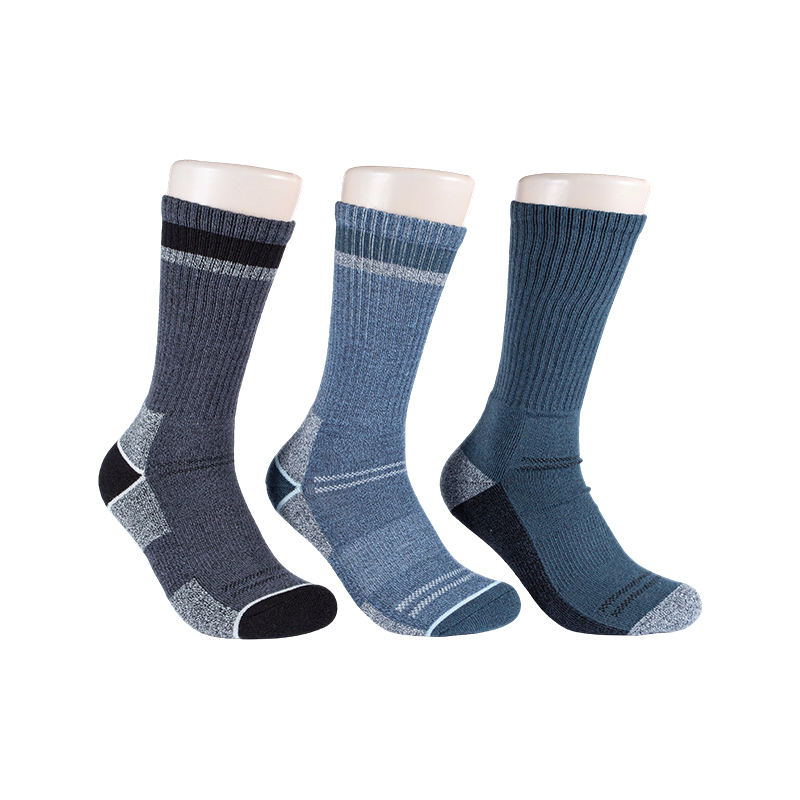
Product Information
This product uses a 168-gauge knitting process, with a fiber blend of 29% nylon, 25% polyester, 25% acrylic, 16% wool, 3% cashmere, and 2% spandex, suitable for foot sizes 10-13. The long, flowing design covers the calf to below the knee, achieving a balance of warmth and durability through a multi-fiber blend. Cashmere fibers are less than 16 microns fine, and wool fibers are less than 24 microns fine, working together to form an air-insulating layer. The 168N gauge ensures structural density while maintaining fabric flexibility, suitable for business and casual occasions requiring leg warmth.
Core Advantages
Composite Insulation Structure: Cashmere and wool comprise 19% of the fabric, with cashmere fibers having a hollowness of over 40%, and the natural crimp of the wool forming a still air layer. The thermal resistance of this blend is higher than that of pure wool, reducing the rate of heat loss at the same thickness.
Fiber Durability Ratio: 29% nylon serves as the backbone fiber, with a breaking strength of 4.5-5.5 cN/dtex, bearing the main tensile load; 25% polyester enhances yarn abrasion resistance; 25% acrylic provides a wool-like fluffy feel and reduces pilling tendency. Multiple synthetic fibers work together to extend the sock's lifespan.
Elasticity Retention System: 2% spandex is distributed in the cuff, leg, and arch areas, providing a 15-20% lateral stretch recovery rate. The long design, combined with progressive pressure knitting, reduces sock slippage and maintains a stable position throughout the day.
Moisture Traction Management: 79% synthetic fibers have a lower moisture absorption rate than wool but a faster moisture wicking rate, transferring moisture from the foot to the outer layer through the wicking effect, reducing heat loss through moisture evaporation.
Application Scenarios: Business Attire: Paired with suit trousers, the long design ensures the socks are not exposed when seated, maintaining the integrity of the outfit. The cashmere component provides a subtle sheen, meeting the visual requirements of business occasions.
Low-temperature office environments: Ideal for air-conditioned rooms in summer or workplaces with insufficient heating in winter. The warmth covering the calves reduces heat loss from the lower limbs, maintaining a stable core body temperature.
Commuting and travel: During long journeys, the progressive compression weave promotes blood flow back to the lower limbs, reducing leg swelling caused by prolonged sitting.
Light outdoor activities: Suitable for low-intensity activities such as hiking and city sightseeing in autumn. The high proportion of synthetic fibers ensures rapid moisture wicking, while the wool and cashmere components cope with temperature fluctuations.
Home warmth: An alternative to thin loungewear socks, providing warmth to the feet and calves in tile or wooden floor environments while maintaining sufficient breathability to prevent stuffiness.
Usage and Care Guide
Washing Recommendations:
Water temperature ≤30°C, use neutral detergent, avoid enzyme-containing detergents that break down wool protein.
Machine wash on a gentle cycle after placing in a laundry bag, or hand wash gently for 3-5 minutes.
Do not use bleach or fabric softener, as the latter will reduce the coefficient of friction between fibers, causing slippage.
Lay flat on a dry towel to air dry naturally; avoid hanging to dry as this can deform the socks.
Wearing Tips
Wash separately before first wear to remove textile processing residue.
Trim toenails to a smooth finish to reduce the risk of snagging at the toe.
When wearing leather shoes or boots, ensure there are no protruding studs or rough seams inside the shoes.
It is recommended to change daily to allow the fibers 24 hours to recover their elasticity.
Frequently Asked Questions
Q: With only 3% cashmere content, does it have actual warmth value?
A: Cashmere fiber fineness (≤16 microns) is significantly lower than wool (≤24 microns). In blends, its main function is to enhance the softness and luster of the fabric. A 3% proportion has been tested to reduce the coefficient of friction of the fabric by approximately 15%, improving the smoothness to the touch. The primary warmth retention is provided by the 16% wool and the still air layer between the fibers, with cashmere playing a secondary role in optimization.
Q: With 79% synthetic fibers, does this affect breathability?
A: Nylon, polyester, and acrylic are all hydrophobic fibers, meaning they do not absorb liquid water but allow water vapor to pass through. The 168-gauge knit structure creates microporous channels, achieving a measured moisture permeability of 800-1000 g/m²/24h, higher than cotton fabrics of the same thickness. The quick-drying properties of synthetic fibers actually reduce moisture retention time.
Q: Will the long socks restrict blood circulation in the legs?
A: The sock cuff uses a progressive pressure design, with pressure at the ankle of approximately 15-20 mmHg, decreasing to 10-12 mmHg towards the knee. This pressure value is lower than that of medical-grade compression socks (20-30 mmHg), falling within the range of comfortable support. Sizes 10-13 correspond to calf circumferences of 38-45cm and will not feel constricting. For those outside this range, please confirm your specific calf circumference.
Q: What is the difference between 168-gauge and 200-gauge products?
A: 168-gauge is a medium-high density knit, with a loop spacing approximately 15% wider than 200-gauge products. The fabric is more flexible and suitable for the knee-high area, where frequent flexion and extension are required. 200-gauge products have a smoother surface but reduced lateral tensile strength. 168-gauge strikes a balance between durability and comfort, and its cost is approximately 20% lower than that of 200-gauge.
Q: Is the blended material prone to pilling?
A: Pilling is mainly caused by short fiber migration and entanglement. This product uses long fibers (≥60mm in length) for wool and cashmere, continuous filaments for nylon and polyester, and only acrylic contains short fibers. The 168-gauge structure tightly wraps the fiber ends, and according to the Martindale abrasion test, the pilling level is 3-4 (5 being optimal), which is within an acceptable range. Regular use of a ball remover can extend the lifespan of the product.
Component
29% Polyamide
25% Polyester
25% Acrylic
16% Wool
3% Cashmere
2% Elastane