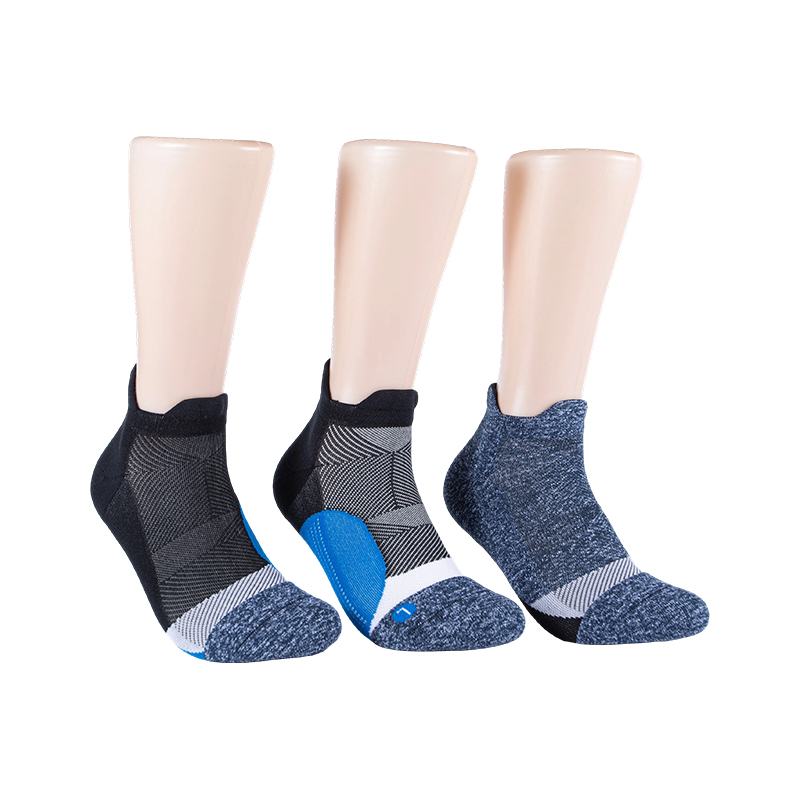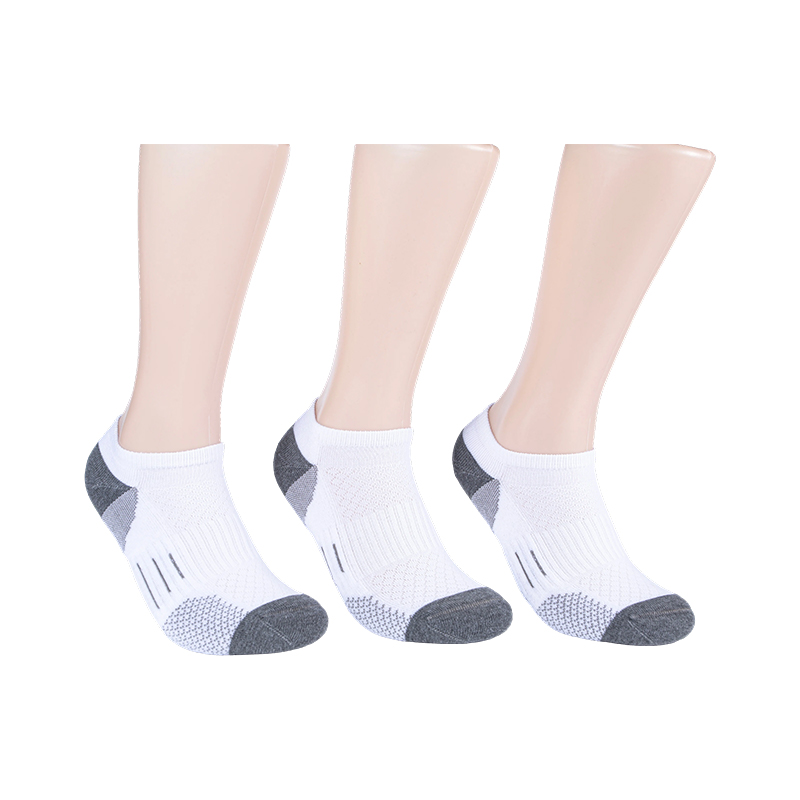
Aug 12, 2026
Content
When a sports retailer briefs us for a summer road-running range, the first question is rarely about yarn blends or knitting density. It is about height. Most runners in warm weather reach for short running socks, but "short" is not one product: it spans no-show, low-cut, and ankle heights, each with different fit behavior, material requirements, and retail positioning. If the assortment is wrong, you end up with either a pile of returns from slipped heels or stock that looks identical once packed.
The core advice is straightforward: your first order should cover no-show and ankle heights in both men's and women's sizes, with low-cut as the bridge option that usually delivers the widest sell-through. Crew and quarter heights are a different buying decision, driven by trail runners and cooler seasons rather than by the warm-weather road runner. This guide explains what sets each short height apart, what to verify in cushioning and materials, and how to brief a supplier so the sample round matches your target market.
Short running socks are defined by the height of the cuff above the heel, not by the length of the foot. Within the segment, the difference between a no-show and an ankle sock changes the fit, the knitting structure, and even the packaging. The table below summarizes the heights used in most performance ranges.
| Cuff height | Rise above heel | Typical use | Main trade-off |
|---|---|---|---|
| No-show | 1 to 3 cm | Road racing, track work, low-profile look | Least debris protection, requires a secure heel tab |
| Low-cut | 4 to 6 cm | Daily training, gym-to-run crossover | Moderate coverage; collar rub depends on shoe shape |
| Ankle | 7 to 10 cm | Warm-weather runs, post-run casual wear | Slightly more fabric, but better stay-put behavior |
For a B2B assortment, the practical implication is that no-show and ankle are not interchangeable replacements. A no-show sock sitting fully below the shoe collar exposes the Achilles to collar friction, so it needs a well-designed heel tab. An ankle sock clears the collar by a few centimeters, which reduces rubbing but adds visible fabric. If your customer is a run-specialty retailer, they will expect both heights. This is why our running socks collection separates these silhouettes rather than grouping them under a single short-sock label.
Cushioning has a bigger effect on how a short sock performs than most buyers realize. The same height can feel completely different depending on where the terry loop is placed.
Ultra-light short socks use no terry or a very thin terry across the foot. They are built for hot days, speed sessions, and runners who want maximum ground feel inside the shoe. The trade-off is less shock absorption and shorter cushioning life. Choose this style if your target market is competitive road runners rather than recreational joggers.
Light cushion with extra terry only in the heel and forefoot is the most versatile choice for a first bulk order. It protects the two impact zones without adding bulk under the arch or on top of the foot. For most retailers, this is the safest opening option because it covers both easy daily miles and longer weekend runs.
Ask your supplier where the terry is knitted. Full-cushion short socks can feel bulky inside tight-fitting road shoes and are harder to sell to warm-weather runners. In contrast, a heel-and-toe cushion layout keeps the profile low and makes the sock feel lighter than it is. When evaluating samples, press the insole area with your thumb: the loop density should be uniform, not lumpy, and it should recover quickly after compression.
Short running socks are small in surface area but high in stress. The blend determines how quickly the sock dries, how long the elastic survives, and whether the heel stays in place after twenty washes.
Nylon is the backbone of performance running socks. It provides abrasion resistance where the foot rubs against the shoe collar and outsole; a sock with too little nylon will show wear at the heel and toe within weeks. Polyester helps move moisture away from the skin and dries faster than cotton. Elastane, usually spun around a nylon core, gives the cuff and arch band their recovery; 5 to 15% elastane is the typical working range for performance short socks. Some lines add merino wool, usually 20 to 40% of the blend, for temperature regulation and odor control, which matters when a runner wears the same pair twice.
Cotton is the material to avoid in warm-weather running socks. It absorbs moisture, loses shape when wet, and increases friction at the heel. A cotton-rich short sock may feel soft in the hand, but it will not perform in summer training.
Height and materials are only half of the specification. The construction details determine whether the sock stays put and whether the runner gets blisters.
A short sock lives or dies at the heel. The heel tab should extend just above the Achilles tendon without digging into it. The heel cup, the shaped area that wraps the back of the foot, should hold the sock in place without a tight elastic band. When you inspect a sample, pull the heel cup sideways: if it deforms easily, the sock will bunch during a run. If it snaps back immediately, the knitting structure is right.
Toe seams are the main source of blisters in any running sock. Look for a flat or seamless toe construction where the yarns are joined without a raised ridge. Some suppliers finish the toe with a hand-linked seam; this is more expensive but almost invisible when worn. For a mid-priced range, a flat-knit toe seam is a reasonable compromise.
A mild arch band, knitted with a higher elastane percentage, supports the midfoot and prevents the sock from sliding forward. This feature is especially important in no-show styles, where there is less fabric to hold the sock in place. The band should feel firm but not like a tourniquet; 15 to 25 mmHg of light compression is the range often cited, although the actual pressure depends on yarn and stitch density.
These details are exactly what an experienced supplier can build into a private-label program. When you review the wider socks product range, compare how each height handles the heel and toe zones before looking at colors and logos.
Most short running sock complaints from end customers fall into three categories: heels that slip, toes that blister, and socks that lose their shape after washing. All three can be caught before bulk production.
A heel that slips during a run usually means the elastane content is too low or the heel cup is too shallow. Do a simple hand-stretch test on a sample: stretch the cuff horizontally and let it go. It should return to its original width almost instantly. If it stays stretched even slightly, the elastane will fatigue quickly in the washing machine.
Wash-test your samples before committing to a large order. Run a batch through five industrial or household wash cycles at 30 to 40°C, then measure the height and width again. Performance socks should shrink less than 3 to 5% and keep their elastic recovery. This single test filters out most low-quality short socks on the market.
If you are a brand or retailer looking for a dependable supply of short running socks, work with a supplier that already produces this category rather than asking a casual-sock factory to adapt. Running socks need different knitting machines, stitch structures, and quality checks than dress or home socks. For example, our men's low-cut running socks are engineered with a lightweight build and a stay-put cuff that suits daily training in warm conditions. Similar considerations apply to lightweight sports ankle socks, which give buyers an ankle-height option with a shorter cuff and a streamlined fit for road running.
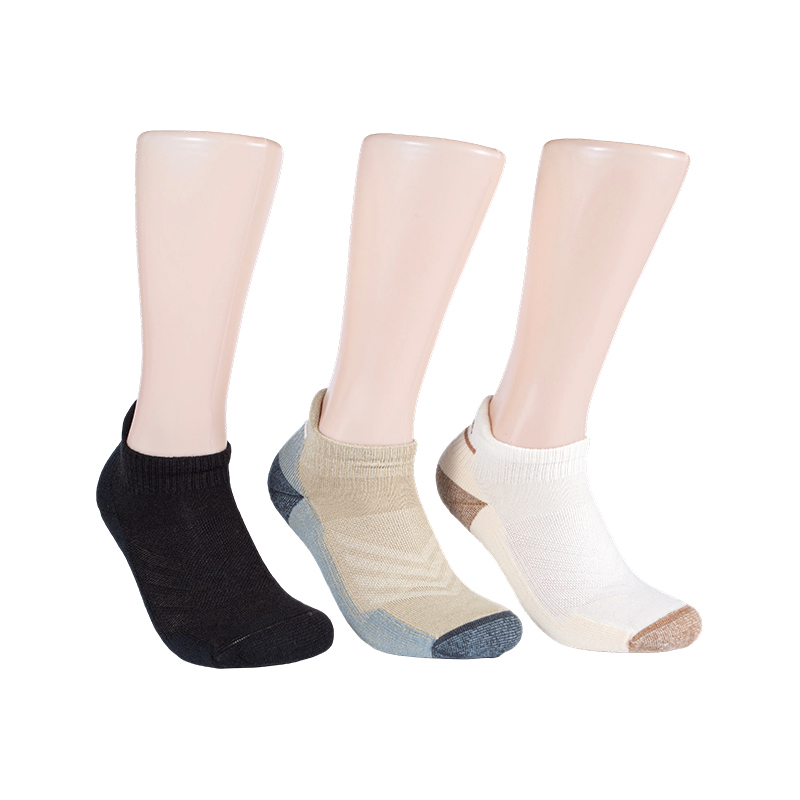 Custom ODM/OEM Men's Lightweight Sports Ankle Socks Manufacturers, FactoryHaining City Bonroy Trading Co., Ltd. Is China Custom ODM/OEM Men's Lightweight Sports Ankle Socks Manufacturers, Factory, This men's lig...View Product →
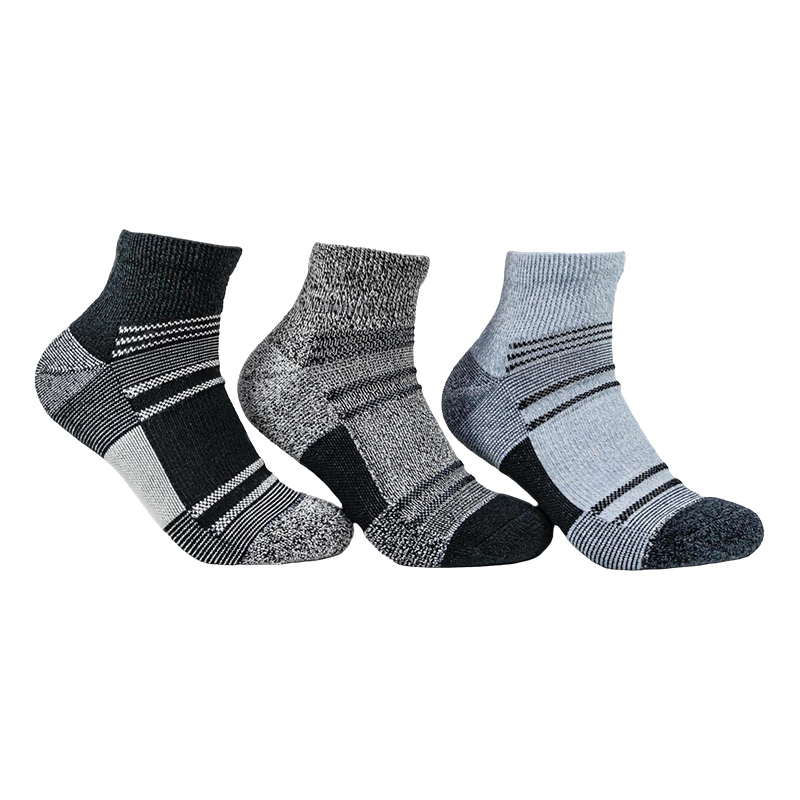 Custom ODM/OEM Men's Running Low Cut Socks Manufacturers, FactoryHaining City Bonroy Trading Co., Ltd. Is China Custom ODM/OEM Men's Running Low Cut Socks Manufacturers, Factory, These men's running ank...View Product →
For buyers who want a middle ground between no-show and crew, low-cut crew running socks offer the coverage of a short crew with a lower cuff, a format that performs well in the transition seasons.
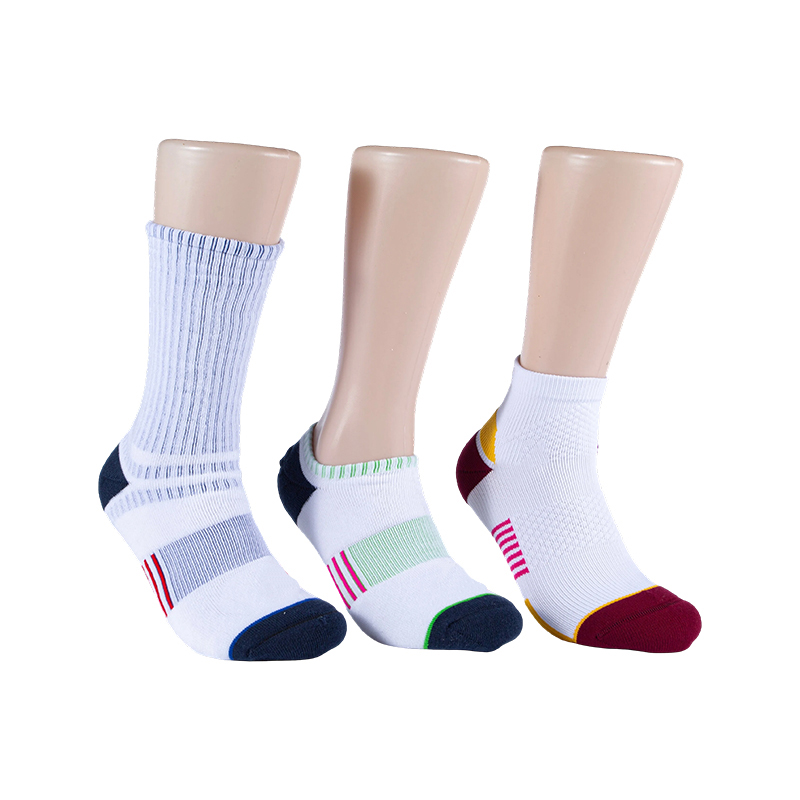 Custom ODM/OEM Men's Running Crew/Low Cut Socks Manufacturers, FactoryHaining City Bonroy Trading Co., Ltd. Is China Custom ODM/OEM Men's Running Crew/Low Cut Socks Manufacturers, Factory, Designed for athle...View Product →
When you issue an RFQ, include the following specifications:
Ask for the stitch density in needles per inch if the supplier can share it; higher density usually means a smoother surface and better durability. If you are building a women's-specific line, review the women's running ankle sock supplier considerations we have compiled, since fit curves and sizing differ from unisex models.
To summarize, the fastest route to a competitive short running sock range is to define the heights, fix the construction, and validate the blend before you worry about branding.
Start with the heights: decide between no-show, low-cut, and ankle based on your customer's primary sport and climate. Warm-weather road runners will buy ankle and no-show; gym-to-run customers will take low-cut. Then fix the cushioning: light heel-and-toe terry is the safe default, ultra-light is the performance statement. Finally, write down the blend and the wash-test requirement in your purchase contract so the supplier is accountable for dimensional stability and elastic recovery. Following these steps will prevent the most common assortment mistakes and give your retail or e-commerce line a running sock program that sells without generating returns.




 English
 中文简体
中文简体 Español