Jul 02, 2026
Content
The best Sports Team Socks combine a nylon spandex blend for moisture wicking and stretch with reinforced heel and toe panels for durability. This combination pulls sweat away from skin during play, holds its shape wash after wash, and survives the repeated friction that wears out plain cotton socks within a single season.
Teams often assume cotton socks are the safe default because the material feels familiar, but cotton absorbs moisture rather than moving it away from the skin. Once cotton gets wet from sweat, it stays wet, which raises blister risk and adds weight to the foot during a match. A blended fabric solves this by combining three materials that each do a different job.
| Material | Primary Role | Typical Share In Blend |
| Polyester or nylon | Moisture wicking, shape retention | 60 percent to 75 percent |
| Cotton | Softness, breathability | 15 percent to 30 percent |
| Spandex or elastane | Stretch, compression fit | 5 percent to 10 percent |
A sock built mostly from nylon or polyester pulls sweat to the outer surface where it evaporates faster, keeping the foot noticeably drier through a full practice session compared with an all cotton pair. The small percentage of spandex is what keeps the sock snug around the arch and ankle instead of sagging after thirty minutes of running.
Moisture wicking is not a marketing label, it is a measurable property tied to fiber structure. Synthetic fibers like polyester are hydrophobic on the surface, meaning they do not absorb water into the fiber itself, so sweat is pushed along the fabric surface to areas where it can evaporate. This is why performance socks feel dry to the touch even during heavy sweating, while a cotton sock feels damp and heavy under the same conditions.
The heel and toe take the most repeated friction and pressure of any part of a sock, both from footwear rubbing during lateral movement and from direct ground contact during sprinting or pivoting. Standard flat knit socks without reinforcement often develop thin spots or holes in these two zones first, usually before any other part of the sock shows wear.
Reinforced construction adds extra yarn density in the heel and toe using a double knit or terry loop technique. This does two things at once, it increases the fabric thickness where abrasion is highest, and it adds a small cushioning layer that reduces direct impact on the foot during running and jumping.
Standard Knit
Even fabric thickness throughout, lower cost, shorter usable life in high friction zones, typically 20 to 30 wash cycles before thinning appears at heel and toe.
Reinforced Knit
Extra density at heel and toe, slightly higher production cost, commonly rated for 50 or more wash cycles before wear becomes visible in those zones.
Selecting a fabric composition depends on the sport being played and how much lateral movement or ground contact the position involves. A soccer or basketball team benefits from a higher spandex percentage for compression and support during quick direction changes, while a baseball or golf team can prioritize breathability with a slightly higher cotton share since movement is less continuous.
| Sport Type | Recommended Blend Focus | Reason |
| Basketball, soccer, tennis | High nylon and spandex, low cotton | Frequent lateral cuts need compression and wicking |
| Baseball, golf, cycling | Balanced cotton and polyester | Longer static periods favor breathability and comfort |
| Cross country, track | High polyester, moderate spandex | Sustained running demands maximum moisture control |
Team socks are rarely ordered as a plain product, most orders include some level of customization to match uniform colors and branding requirements. Manufacturers typically offer several methods, each suited to different budgets and order volumes.
Knit In Logos
Team logo or number is knitted directly into the fabric during production, giving a permanent design that will not crack or peel over repeated washes. Best suited to larger orders due to setup requirements.
Sublimation Printing
Full color designs are heat transferred into the fabric fibers, allowing complex graphics, gradients and multiple colors at a lower minimum order quantity than knit in logos.
Color Blocking
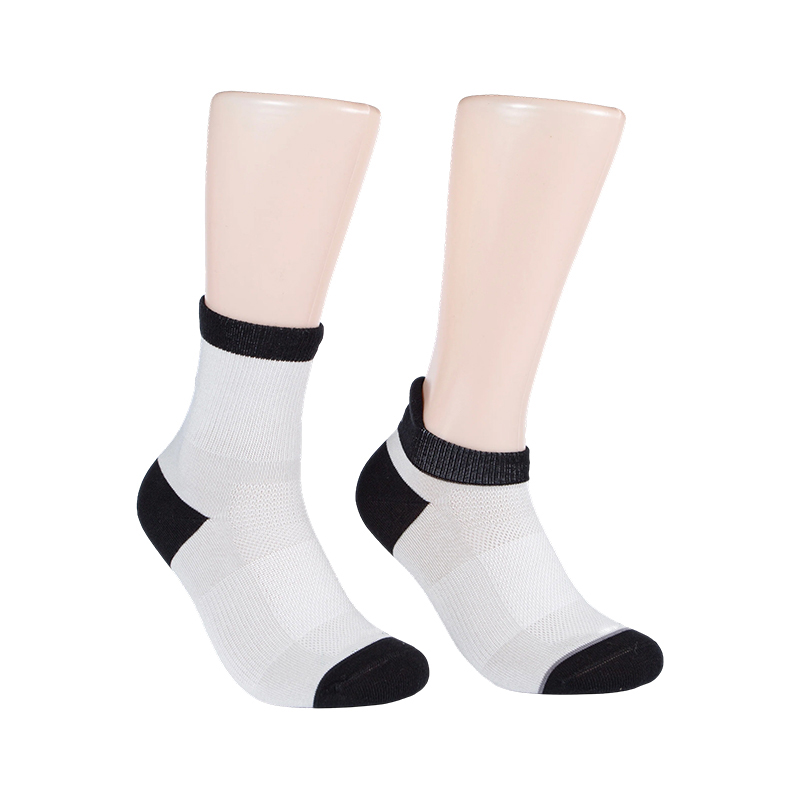
Different colored yarns are used for the leg, heel, toe and cuff sections, letting teams match primary and secondary uniform colors without a printed graphic.
Cuff Height Options
Crew, quarter and over the calf lengths are available across most customization methods, allowing teams to match sock height to sport specific rules or preference.
Compression Zoning
Targeted compression can be built into the arch and ankle areas during knitting, adding support without changing the outward appearance of the sock.
Order volume generally determines which customization method makes financial sense. Small orders under a few dozen pairs are usually better suited to sublimation printing due to lower setup costs, while orders in the hundreds or more can justify knit in logos, which produce a more durable and higher end finished look for a similar per unit price at scale.
Consistent sizing across a full roster matters as much as fabric choice, since a sock that is too loose reduces the benefit of moisture wicking and compression regardless of material quality. Most team sock suppliers size by shoe range rather than standard small, medium, large labels, which reduces fitting errors when ordering for a full team with varied foot sizes.
| Shoe Size Range | Typical Sock Size Label |
| Youth 10 to 4 | Small |
| Adult 5 to 9 | Medium |
| Adult 9 to 13 | Large |
Requesting a size chart tied directly to shoe size, rather than relying on generic labeling, reduces the number of exchanges needed after a bulk team order arrives.




 English
 中文简体
中文简体 Español