Crafting Comfort, Defining Freedom

Latest Updates
Skiing Socks Industry knowledge
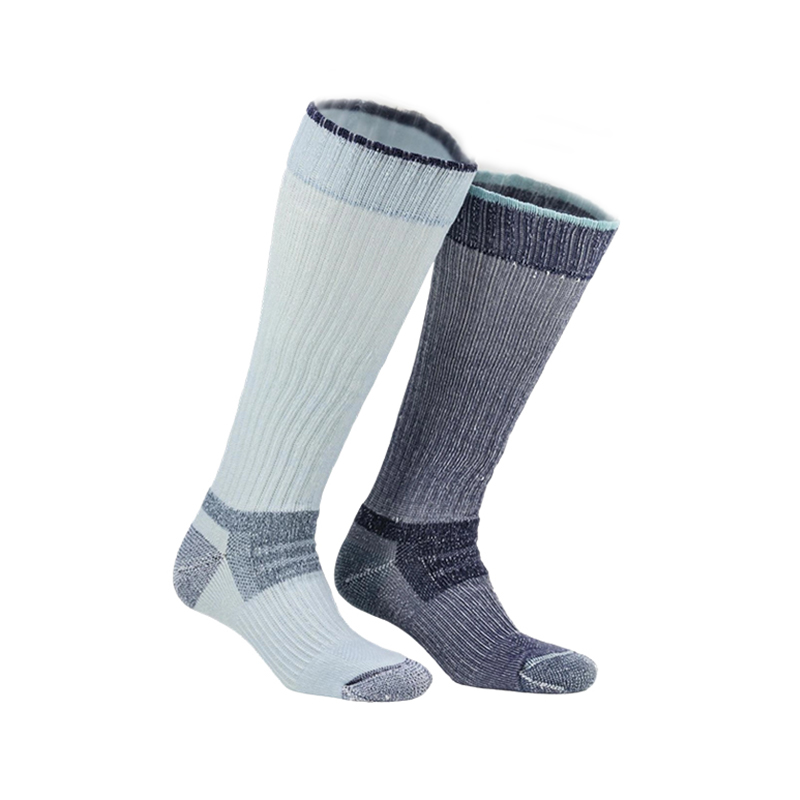
Skiing exposes the feet to a challenging combination of low temperatures, snow, boot pressure, sweat, and limited airflow. Ordinary thick socks may feel warm at first, but they can trap moisture, bunch inside ski boots, and reduce circulation. Well-designed Men's and Women's Ski Socks help solve these problems by combining thermal insulation, moisture management, targeted cushioning, and a secure fit.
The key to staying warm and dry on the slopes is not simply wearing the thickest sock. Instead, ski socks work best when they balance warmth, breathability, and boot compatibility. A sock that is too bulky can restrict blood flow, while a sock that cannot manage sweat may leave feet damp and cold.
Ski socks keep feet warm by trapping a controlled layer of warm air around the foot while allowing enough space inside the boot for healthy circulation. Good circulation is essential because warm blood flow helps maintain foot temperature in cold weather.
Dryness is just as important as warmth. Feet can sweat even in cold weather, especially inside insulated ski boots. If that moisture stays against the skin, it can make feet feel cold, clammy, and uncomfortable. Ski socks help keep feet dry by moving moisture away from the skin and allowing it to spread through the fabric for faster evaporation.
The best ski socks usually use blended materials because each fiber contributes a different performance benefit. A balanced blend can provide warmth, moisture control, stretch, durability, and shape retention.
| Material | Warmth Performance | Moisture Management | Best Use | Key Consideration |
|---|---|---|---|---|
| Merino Wool | High natural insulation | Manages moisture well and helps regulate temperature | Cold weather, long ski days, variable mountain conditions | Works best when blended with durable and elastic fibers |
| Polyester | Moderate warmth depending on knit thickness | Strong moisture-wicking and quick-drying performance | Active skiing, high-sweat conditions, lightweight warmth | Often blended for better softness and comfort |
| Nylon | Moderate warmth | Dries quickly and adds strength | High-wear areas such as heel, toe, and shin zones | Mainly used for durability and structure |
| Acrylic | Good synthetic insulation | Moderate moisture control | Warmth-focused ski socks | Should be paired with wicking fibers for better dryness |
| Spandex or Elastane | Low insulation by itself | Does not primarily wick moisture | Fit, stretch, arch support, calf hold | Essential in small amounts for a stay-up fit |
| Cotton | Low performance when wet | Poor moisture management because it absorbs and holds sweat | Not recommended for ski socks | Can make feet feel cold and damp after sweating |
Sock thickness affects warmth, boot feel, and circulation. The right choice depends on boot fit, skiing intensity, weather, and personal comfort preference.
| Thickness Level | Warmth | Breathability | Boot Feel | Best For |
|---|---|---|---|---|
| Lightweight Ski Socks | Moderate | High | Precise, close contact with the boot | Performance skiing, snug boots, warmer ski days |
| Midweight Ski Socks | Balanced | Good | Comfortable with some cushioning | Most recreational skiers and all-day use |
| Heavyweight Ski Socks | High if boot space allows | Lower than thinner socks | Softer but bulkier | Very cold conditions, relaxed skiing, roomier boots |
It is common to assume that thicker socks are always warmer, but this is not always true in ski boots. If socks are too thick, they can compress the foot and reduce circulation. Restricted circulation may make feet feel colder, even when the sock itself is heavily padded.
In addition to material choice, the construction of ski socks plays a major role in comfort. A good ski sock is engineered to work with the shape and pressure zones of ski boots.
Men's and women's ski socks often share the same core purpose: warmth, dryness, comfort, and protection inside ski boots. However, some designs may be adjusted for differences in foot shape, calf fit, and sizing.
| Feature | Men's Ski Socks | Women's Ski Socks |
|---|---|---|
| Fit Profile | Often shaped for wider feet and larger sizing ranges | Often shaped for narrower feet and smaller sizing ranges |
| Calf Shape | May offer a slightly broader calf fit | May provide a more contoured calf fit |
| Cushion Placement | Designed around common pressure points in men's boot fits | Designed around common pressure points in women's boot fits |
| Performance Goal | Warmth, dryness, durability, and boot control | Warmth, dryness, comfort, and secure fit |
Choosing the right ski socks depends on more than size. The sock should match your boot fit, skiing style, weather conditions, and sensitivity to cold.
Even good ski socks may not perform well if they are used incorrectly. Avoiding a few common mistakes can make a noticeable difference in warmth and dryness.
Proper care helps ski socks maintain their shape, elasticity, and moisture-wicking ability over time.
Men's and women's ski socks keep feet warm and dry by combining insulating materials, moisture-wicking fibers, targeted cushioning, and a secure boot-compatible fit. The best ski sock is not necessarily the thickest one. It is the sock that fits smoothly, supports circulation, manages sweat, and provides the right level of warmth for the conditions.
For most skiers, a well-fitted midweight ski sock made with a merino wool blend or performance synthetic blend offers a strong balance of warmth, dryness, and comfort. For performance skiing or tighter boots, lightweight socks may provide better control and breathability. For very cold conditions, heavier cushioning can help, as long as it does not make the boot too tight.
Not always. Thick ski socks can be warm if there is enough room in the boot, but if they make the boot too tight, they may reduce circulation and make feet colder. A properly fitted lightweight or midweight ski sock often provides better warmth and comfort than an overly bulky sock.
Cotton absorbs and holds moisture. When feet sweat inside ski boots, cotton socks can become damp and stay wet, which may make feet feel cold and uncomfortable. Moisture-wicking wool blends or synthetic blends are usually better for skiing.
Ski socks should generally rise above the top of the ski boot. This helps protect the shin and calf from boot pressure, prevents rubbing, and keeps the sock from slipping down during skiing.




 English
 中文简体
中文简体 Español