Crafting Comfort, Defining Freedom
Latest Updates
Slipper Home Socks Industry knowledge
The slipper home sock occupies a distinct product position between conventional hosiery and indoor footwear — combining the close-fitting, packable nature of a sock with the sole reinforcement, warmth, and grip characteristics historically associated with slippers. Understanding where these categories overlap and diverge clarifies why slipper socks have grown into a standalone segment rather than a compromise between two product types.
Traditional slippers provide structure through a rigid or semi-rigid sole unit and an independent upper, which creates a product with good floor protection and durability but significant bulk, limited packability, and a fixed size relationship that does not accommodate foot swelling or sock layering. They also require dedicated storage and are impractical for travel, hospitality, or gifting contexts where flat-pack convenience matters.
Slipper home socks address all of these limitations while delivering comparable grip safety, meaningful sole cushioning, and warmth levels that meet or exceed many entry-level slipper products. Their stretch construction accommodates a range of foot shapes and sizes within a single size bracket, and their flat-pack format makes them straightforwardly giftable and travel-compatible in a way that rigid slippers are not.
Where traditional slippers retain an advantage is in long-duration standing on hard floors, where a structured midsole distributes load more effectively than any knit construction. For sedentary and light-activity indoor use — which describes the majority of home sock wear occasions — Slipper Home Socks perform the functional role of indoor footwear without its practical drawbacks.
The sole construction of a slipper home sock is its most technically demanding component and the primary differentiator between products that perform like indoor footwear and those that merely resemble it. Several engineering approaches are used across the category, each with distinct trade-offs between cushioning, durability, grip performance, and manufacturing cost.
Foam-padded sole panels insert a layer of EVA or polyurethane foam between the outer sole surface and the foot contact layer. This construction delivers meaningful impact absorption and standing comfort on tile and hardwood, and produces a product with a perceptibly different underfoot feel from standard knit socks. The primary durability concern is delamination of the foam layer from the knit upper at the bonding interface, which is a function of adhesive quality and stitching reinforcement at the perimeter.
Reinforced knit sole construction uses significantly denser yarn and higher stitch counts in the footbed relative to the upper, creating a multi-layered sole zone within a continuous knit structure. This approach eliminates delamination risk entirely and produces a sock with consistent construction throughout, though peak cushioning levels are lower than foam-insert designs.
TPR (thermoplastic rubber) outsole attachment represents the most slipper-like sole construction available in the category — a separately manufactured rubber sole unit is bonded or stitched to the knit upper, delivering genuine abrasion resistance and multi-surface traction. TPR-soled slipper socks can transition between indoor and brief outdoor use (stepping outside to collect a delivery, crossing to an adjacent building) without sole degradation, a functional versatility that is increasingly valued by consumers.
| Sole Type | Cushioning | Durability | Outdoor Use |
|---|---|---|---|
| Silicone grip print | Low | Medium–High | No |
| Foam-padded panel | Medium–High | Medium | No |
| Reinforced knit sole | Low–Medium | High | No |
| TPR outsole | Medium | Very High | Limited |
The upper of a slipper home sock must satisfy competing requirements simultaneously: it needs to be warm enough to justify its category positioning, structured enough to stay in place during movement, soft enough against bare skin for hours of comfortable wear, and easy enough to put on and take off that it does not frustrate users with limited dexterity — an important consideration given the strong demand for slipper socks among older adults.
Common upper constructions and their functional profiles include:
Slipper home socks serve a broader and more varied user base than most hosiery categories. Their practical utility spans daily personal use, hospitality and wellness settings, and gifting — each context placing slightly different demands on the product.
For personal daily use, durability and wash performance are the primary long-term value drivers. Products that maintain grip adhesion, lining softness, and sole integrity across 50 or more wash cycles deliver meaningfully better value than lower-cost alternatives that degrade within a season. Checking whether grip is silicone-based (more durable) versus PVC-printed (degrades faster under heat) is a practical purchasing filter.
In hospitality and wellness environments — spas, hotels, yoga retreats — slipper socks are provided as single-use or limited-use amenities. Here, cost-per-unit, packaging presentation, and immediate comfort impression outweigh long-term durability. Closed-cell foam sole constructions and vacuum-packaged formats are common in this segment.
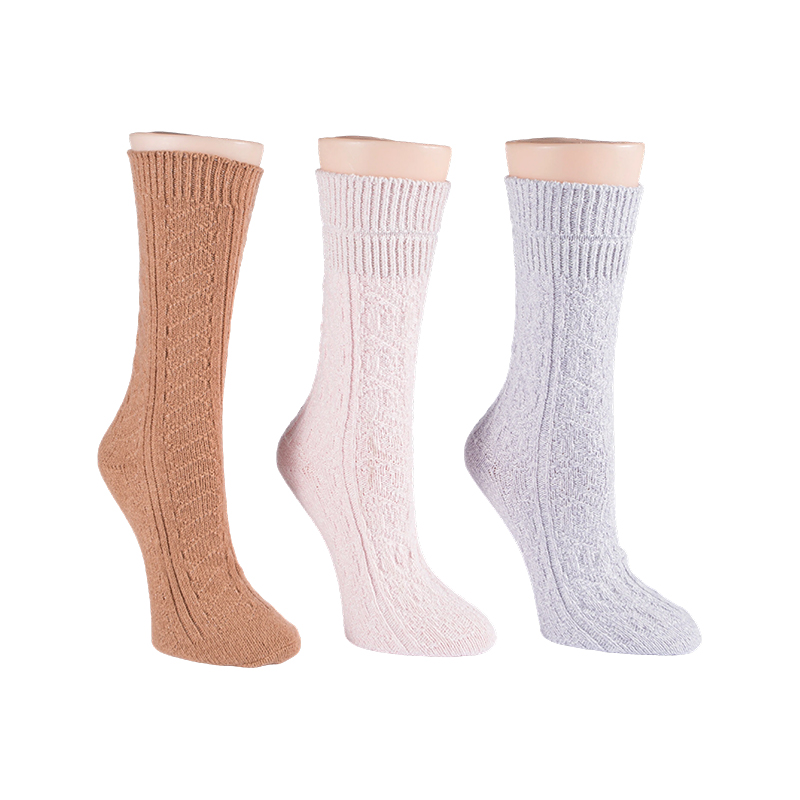
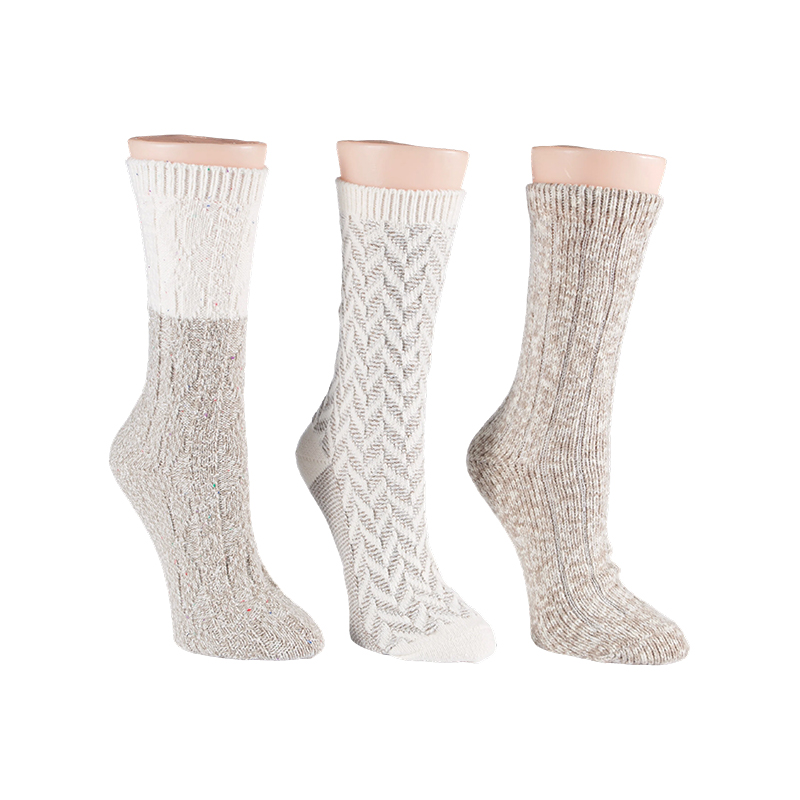
For gifting, the aesthetic legibility of quality matters as much as actual construction quality — cable textures, coordinated colorways, decorative cuff details, and thoughtful packaging all contribute to perceived value before the product is worn. A well-presented slipper sock communicates care and attention in a way that generic alternatives do not.
Across all of these contexts, the common thread is that the best Slipper Home Socks are those designed with a specific wearer experience in mind from the outset — not assembled from default components, but considered from sole to cuff to deliver something that genuinely improves the hours spent at home.




 English
 中文简体
中文简体 Español