Crafting Comfort, Defining Freedom
Latest Updates
Yoga Socks Industry knowledge
The defining functional feature of yoga socks is their grip system — typically achieved through silicone or rubber dot patterns applied to the sole and sometimes the toe and heel regions. Understanding how grip architecture works helps explain why different designs suit different yoga disciplines and surface conditions.
Silicone grip dots function by increasing the coefficient of friction between the sock and the mat surface. Their effectiveness depends on three variables: dot density, dot height, and the firmness of the silicone compound used. Higher dot density distributes grip force across more contact points, which benefits balance-intensive standing poses like Warrior III and Tree Pose. Lower-density patterns with larger dots tend to perform better on smooth wooden or laminate studio floors where individual contact points can depress slightly into the surface.
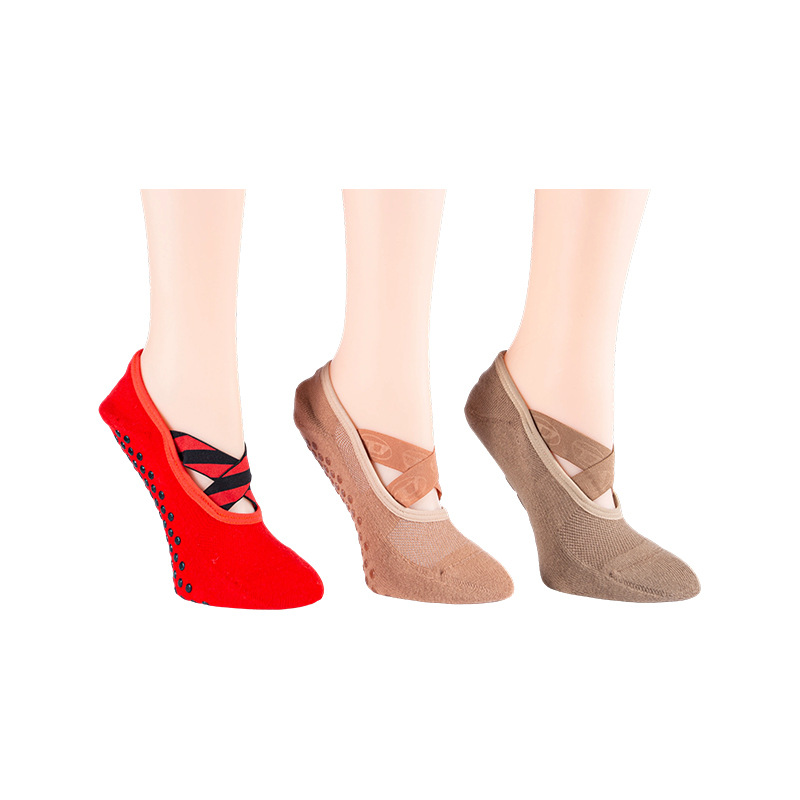
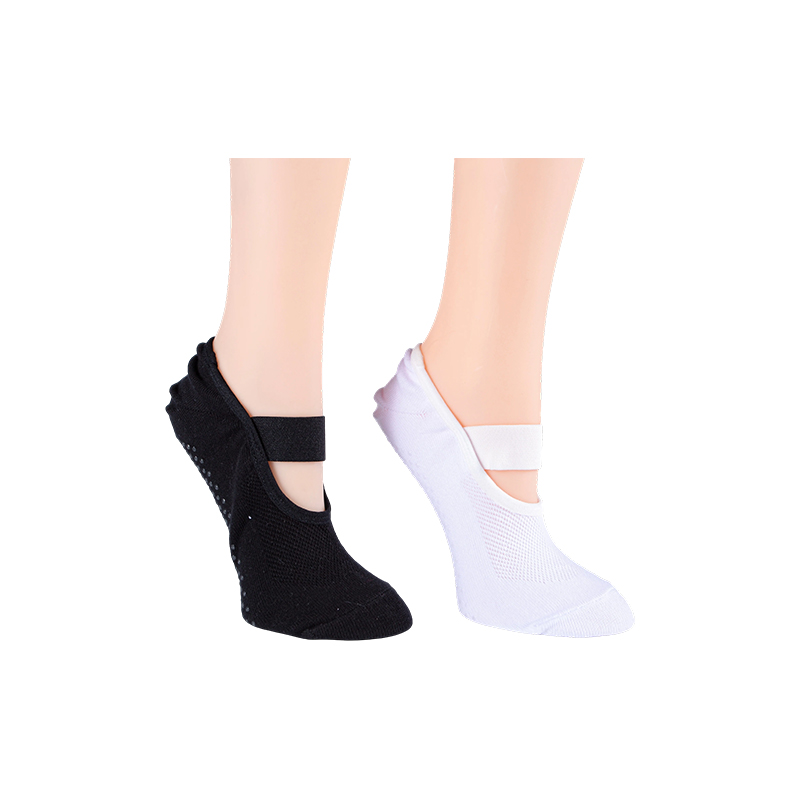
Yoga Slipper Socks designed with full-coverage grip soles — extending dots from the heel through the forefoot — provide the most consistent anti-slip performance across transitions, while partial-grip constructions prioritize flexibility and a closer-to-barefoot sensory experience for practitioners who prefer mat feedback during floor sequences.
One of the most debated design choices in yoga sock construction is whether to leave the toes exposed or enclose them. Both configurations have legitimate functional rationales, and the right choice depends on the style of practice and individual anatomical preference.
Toe-open designs allow the toes to splay freely against the mat — a biomechanical requirement for poses that demand active toe extension and spread, such as Mountain Pose, Downward Dog, and Lotus. Toe splay is an underappreciated stabilizing mechanism: wider toe contact increases the base of support and engages the intrinsic foot muscles that contribute to arch integrity.
Toe-closed constructions enclose the full foot, offering greater warmth and coverage — particularly relevant for Yin yoga, restorative practices, and meditation sessions where the body is held in passive positions for extended periods and heat retention becomes a comfort priority. They also provide a more uniform grip surface across the entire foot sole.
At Bonroy, decisions around toe architecture are approached the same way as all design choices — by considering how the garment interacts with the body in actual use conditions, not simply as a manufacturing default.
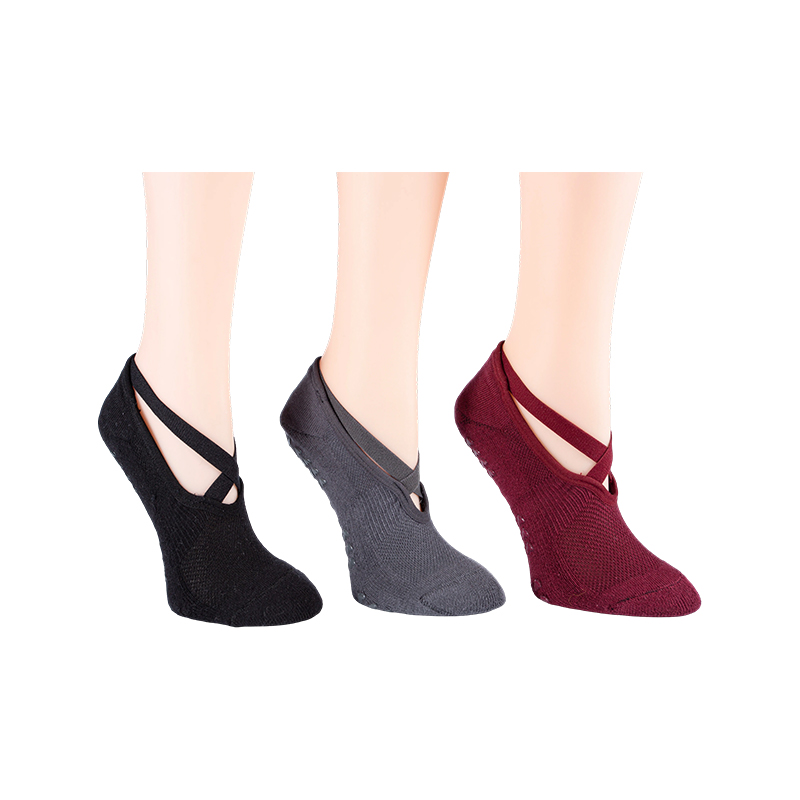
Extended-length yoga socks — those reaching mid-calf or higher — serve a distinct set of functional purposes beyond what ankle-height designs address. Their growing popularity reflects a shift in how practitioners approach full-session comfort, particularly in studios with cool ambient temperatures or on smooth hardwood floors.
From a physiological standpoint, light graduated compression in the calf can support venous return during long-held standing sequences, reducing the sensation of lower-leg fatigue that accumulates during extended balancing work. This is particularly relevant for practitioners who practice daily or combine yoga with other lower-body training that already stresses the calf musculature.
Long Yoga Socks also provide a larger surface area for moisture management — drawing perspiration away from the calf skin during hot yoga and power flows where total-body sweating occurs. Fabric construction in the leg portion typically uses a lighter, more breathable knit than the footbed to maintain thermal comfort without restricting movement at the ankle joint.
Aesthetically, longer lengths have become a meaningful category in studio wear, often coordinated with leggings and shorts as part of a cohesive practice outfit — a dimension of yoga apparel that continues to grow in relevance as the boundary between activewear and everyday fashion narrows.
Studio environments — warm, humid, and shared — place specific demands on yoga sock materials that differ from those of outdoor athletic socks. Hygiene performance is a practical priority: the combination of bare-skin contact with communal mat surfaces makes antimicrobial fiber properties a meaningful feature rather than a marketing claim.
Silver-ion treatments and inherently antimicrobial fibers such as bamboo-derived viscose reduce odor-causing bacterial growth in the footbed over repeated uses. These treatments are most effective when integrated into the fiber at the spinning stage rather than applied as a surface coating, which degrades with washing.
| Material | Key Property | Studio Suitability |
|---|---|---|
| Bamboo viscose | Natural antimicrobial, soft hand feel | Excellent for hot yoga and sensitive skin |
| Polyester microfiber | Fast moisture wicking, lightweight | Strong in flow-based practices |
| Cotton blend | Breathable, comfortable texture | Best for restorative and low-intensity sessions |
| Spandex / Elastane | Stretch recovery, compression | Essential in all constructions for fit retention |
Care instructions significantly affect grip longevity. Silicone grip dots are vulnerable to high heat: machine washing in warm water and air drying — rather than tumble drying — extends grip adhesion and prevents delamination. Turning socks inside out during washing also protects the grip surface from abrasion against other garments. These are the kinds of material and care details that, at Bonroy, inform product development from the specification stage — because a sock's value is only realized across consistent, long-term use.




 English
 中文简体
中文简体 Español