


 English
 中文简体
中文简体 Español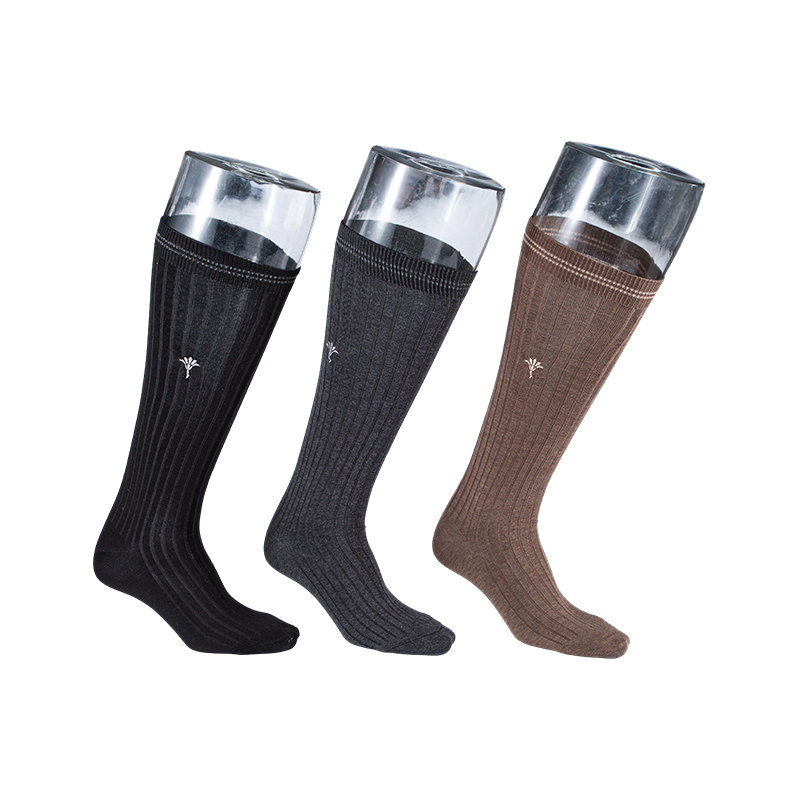
Product Information
Ladies' silk blend socks utilize 200N DC (double cylinder) knitting construction, achieving 200 needles per inch with fine structure. The fabric comprises 58% Lyocell, 30% nylon, 5% mulberry silk, 4% spandex, and 3% metallic yarn. Lyocell fibers provide moisture absorption and breathability, mulberry silk imparts a smooth hand feel and natural luster, while the metallic yarn component generates a subtle reflection under light. Size 9-11 covers the adult female foot length 23-25cm. Knee-high design covers the lower leg to 5-10cm below the knee, suitable for multi-season wear scenarios.
Core Advantages
Tactile Comfort: Lyocell fiber surface friction coefficient 0.18-0.20, lower than cotton's 0.25-0.30, combined with sericin protein layer of mulberry silk, reducing friction resistance between foot and sock contact surface. Double cylinder knitting differentiates inner and outer layer structures, with longer inner loops forming a soft contact surface.
Humidity Regulation: Lyocell standard moisture regain 13% and mulberry silk 11% create a synergistic moisture absorption pathway, maintaining foot microenvironment relative humidity below 60%. Hydrophobic nylon core accelerates outward moisture transmission, with a drying rate 40% faster than pure cotton socks.
Anatomical Fit: 4% spandex content provides 18-22% lateral stretch, accommodating a calf circumference range of 28-38cm. Knee-high length combined with a ribbed cuff maintains position stability during walking and sitting transitions, with slippage controlled at an average of 2cm per 8 hours.
Visual Characteristics: 3% metallic yarn embedded as core-spun yarn, fiber diameter 12-15μm, generating soft luster reflection under 500-800lux ambient illumination without harsh highlights. 200N fine knitting distributes metallic fibers evenly, avoiding localized aggregation and prickling sensation.
Technical Specifications
Gauge: 200N DC (double cylinder circular machine)
Fiber Composition: 58% Lyocell / 30% Nylon / 5% Mulberry Silk / 4% Spandex / 3% Metallic Yarn
Size Range: 9-11 (foot length 23-25cm, calf circumference 28-38cm)
Fabric Structure: Double layer, inner terry or smooth, outer dense
Length Specification: Knee-high (5-10cm below the knee)
Cuff Structure: Double-layer rib, 3cm width, pressure 2.8-3.2kPa
Toe Closure: Hand-linked, seam thickness ≤0.8mm
Heel Design: Y-shaped contoured heel pocket
Metallic Yarn Distribution: Vertical spaced stripes or scattered dots, no continuous metal film
Application Scenarios
Business Settings: Knee-high length adapts to suit skirts or formal trousers, with cuff concealed within hem. Metallic yarn sheen presents understated luster in conference room lighting without distraction.
Daily Commute: Lyocell and mulberry silk moisture combination supports all-day wear, delaying foot stuffiness onset by 2-3 hours compared to synthetic fiber socks at 60% relative humidity.
Seasonal Transition: 200N fine knitting forms an air layer thickness of 0.3-0.5mm, providing base insulation at 15-20°C ambient temperature, maintaining coolness above 25°C through fiber moisture wicking.
Light Social Events: Metallic yarn visual element adapts to evening indoor activities, producing visible but restrained luster effect at 300-500lux illumination, creating material contrast with leather shoes or ankle boots.
Care & Maintenance
Wash at temperatures not exceeding 30°C, using neutral detergent pH 6-7. Lyocell fiber wet strength decreases approximately 30%; avoid wringing forcefully. Mulberry silk protein composition is vulnerable to alkaline detergent damage—soap products dissolve sericin and eliminate luster.
Turn inside out for washing to reduce metallic yarn friction with external objects. Separate dark and light colors; Lyocell may exhibit slight color bleeding in initial washes.
Dry flat in a shaded, ventilated area; avoid hang-drying, which causes longitudinal stretching of the shaft. Direct sunlight triggers mulberry silk protein denaturation, fiber embrittlement, and metallic yarn surface oxidation discoloration.
Iron at temperatures not exceeding 110°C; steam ironing restores smoothness, avoiding direct contact with metallic yarn areas. Store folded flat long-term; place moth repellent wrapped in paper to prevent direct naphthol contact with mulberry silk.
Pre-wash separately before first wear to remove sizing residues from textile processing. Slight tactile sensation at metallic yarn edges is a normal physical phenomenon; fiber fuzz subsides after several wears, reducing prickling.
Frequently Asked Questions
What distinguishes 200N DC from standard 200N?
DC indicates a double cylinder structure, with inner and outer cylinders knitting fabric layers separately, enabling two-layer combinations of different structures or colors. Standard single cylinder knits single-layer only. A double cylinder enables differentiated design with soft inner and dense outer layers.
Is 5% mulberry silk content effective?
Mulberry silk fiber fineness 9-11dtex, significantly lower than Lyocell's 13-15dtex, occupies 8-10% surface area in yarn cross-section at 5% content. Sericin protein concentrates on the fiber exterior; small quantities improve fabric hand and luster. Higher proportions significantly increase cost and reduce fabric strength.
Can metallic yarn cause skin allergy?
Metallic yarn is aluminum-coated polyester or nylon film cut into flat filaments, externally covered with a transparent protective layer. At 3% content with dispersed distribution, the skin contact area is limited. For metal ion sensitivity, select styles with metallic yarn on the outer layer to reduce direct contact.
How to address knee-high sock slippage?
Slippage usually results from insufficient cuff pressure or calf circumference below the design minimum. Measure calf circumference at the largest point in a relaxed state; if below 28cm, consider using garter belts or modified styles with silicone grip strips. Avoid fabric softener on cuffs—silicone oil reduces rib friction.
Component
58% Lyocell
30% Polyamide
5% Silk
4% Elastane
3% Lurex