Sep 24, 2026
Content
Basketball players put their calves through more abrupt acceleration, deceleration, and jumping than almost any other athlete. The gastrocnemius and soleus muscles absorb constant impact, and the ankle-lock cuff on a pair of true basketball compression socks exists specifically to address that load. At around 15-20 mmHg of graduated pressure, these socks support venous return while the foot and shin remain free enough for the quick cuts that define the game.
The real question for players and team buyers is not whether compression helps, but which level, material, and fit deliver measurable benefits on the court. This guide breaks down the mechanics, the spec sheet, and the procurement considerations that matter when you buy these socks for your own game or your team's next season.
Basketball compression socks are knit garments that apply graduated pressure from the ankle upward, with the highest pressure at the foot and lower pressure at the calf or knee.
The core definition: graduated compression is a knit structure where the tightest point sits at the ankle and pressure decreases in a controlled gradient as the sock moves up the leg, pushing blood toward the heart and reducing fluid pooling in the calves.
A standard basketball crew sock provides cushioning but no active compression. A compression sock combines elastane wraps with targeted knit zones that hold the calf muscles in place during jumps and lateral movements. Pressure is measured in mmHg (millimeters of mercury), the same scale used for blood pressure.
| Compression level | Pressure range | Best use case |
| Mild | 15-20 mmHg | Daily practice, travel, long games |
| Moderate | 20-30 mmHg | Game day, recovery, post-injury return |
| Firm | 30-40 mmHg | Medical use, severe edema, not for general play |
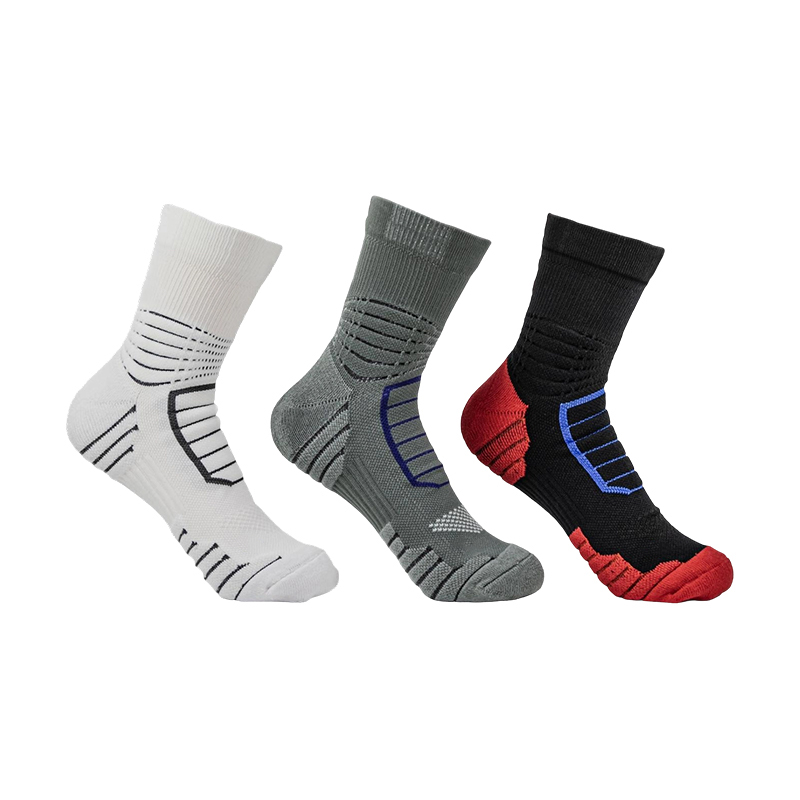 Men's Basketball Socks with Selective Cushioning and Arch SupportThis sock uses a 144N selective terry weave to add padding at the heel and plantar, reducing slippage and impact during jumps and lateral cuts. Its cotton, polyamide, polyester, and spandex blend balances dryness, durability, and a secure fit, making it a practical choice for high-intensity court play.View Product →
The measurable benefits of basketball compression socks come down to three systems: blood flow, muscle control, and recovery signaling.
Athletes who wear compression socks during games often report less stiffness the next morning, which matters when the schedule runs three games in four nights. The compression level should be matched to your position and playing style: guards who stay on the perimeter benefit from lighter pressure, while big men who jump repeatedly benefit from stronger calf support.
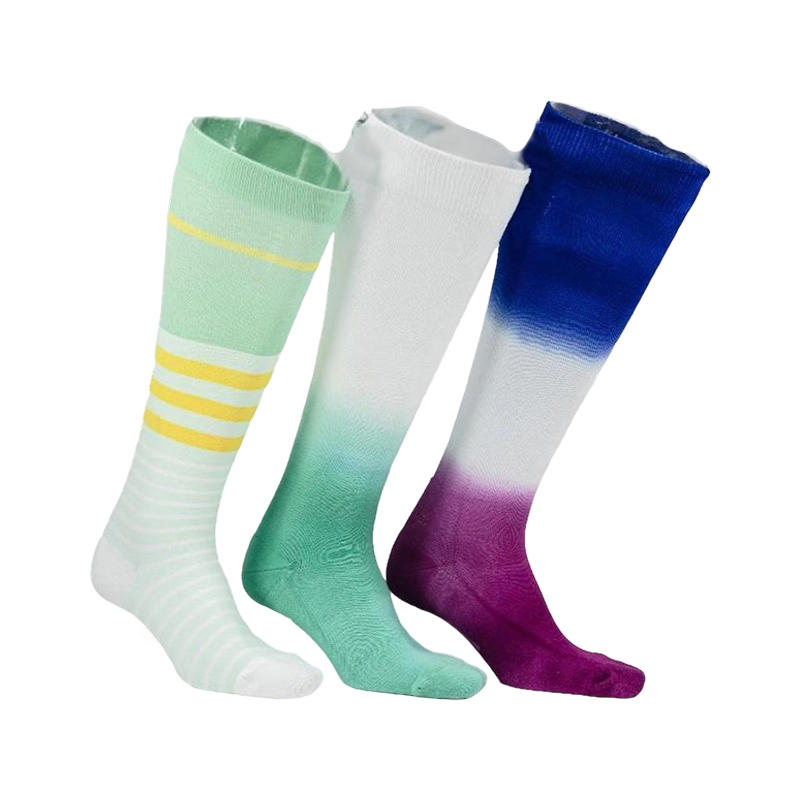
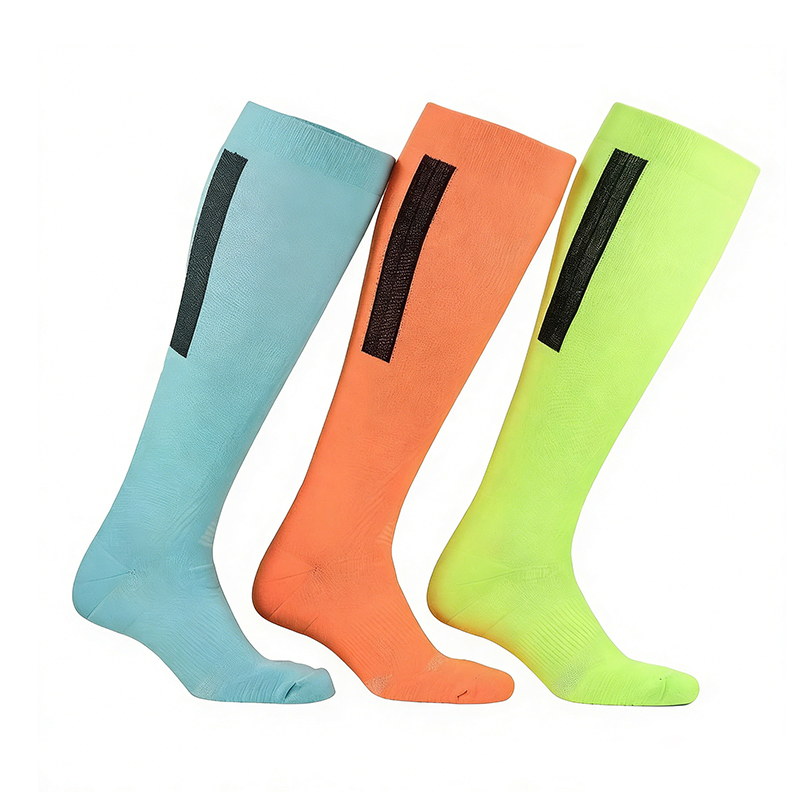 Graduated Compression Socks for Circulation and RecoveryMade with 200N precision knitting and a polyamide-elastane blend, these socks provide graduated pressure from ankle upward to support venous return. They suit long sitting, standing work, or post-exercise recovery, with a smooth, durable surface that maintains shape over repeated use.View Product →
Fit and material selection matter more than the mmHg number on the package. A compression sock that fits badly will not deliver the pressure gradient it claims, and a material that traps moisture will create blisters before the fourth quarter.
The most durable build for basketball is a nylon and elastane blend, sometimes with a small percentage of polyester for moisture management. Merino wool blends are excellent for temperature regulation and odor control, and work well in outdoor or alternating indoor-outdoor settings. Cotton is not recommended because it holds sweat and loses its shape.
| Material | Moisture control | Durability | Temperature control | Best scenario |
| Nylon-elastane | High | High | Fair | Game day |
| Merino blend | High | Medium | Excellent | Outdoor and travel |
| Cotton blend | Low | Medium | Poor | Not recommended |
The rule of thumb: fit first, then pressure. A 20 mmHg sock that fits badly performs worse than a 15 mmHg sock that fits perfectly.
The right compression level depends on when you intend to wear the socks. For everyday practice and travel, 15-20 mmHg provides a comfortable baseline without cutting into the foot. For game day, 20-30 mmHg offers stronger calf support and better recovery between games.
For most basketball players above the high school level, 20 mmHg is the sweet spot. It is enough to prevent blood pooling during a 32-minute game, but not so tight that it reduces ankle mobility. If you play back-to-back games, a second pair at 15-18 mmHg for the morning shootaround is a practical choice.
Above 30 mmHg is outside the normal basketball use range. Do not self-select this level for game play.
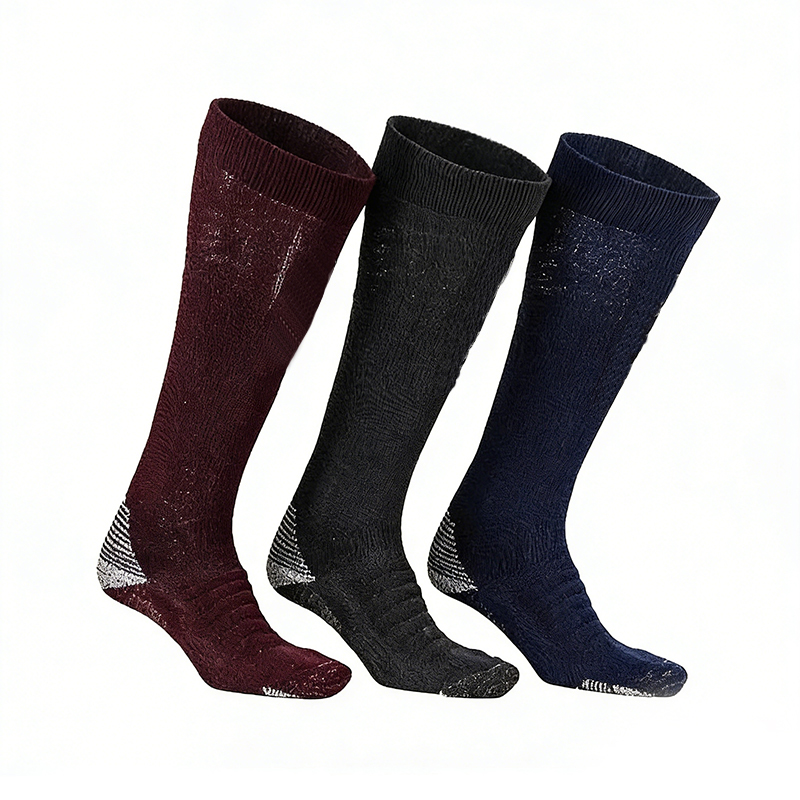
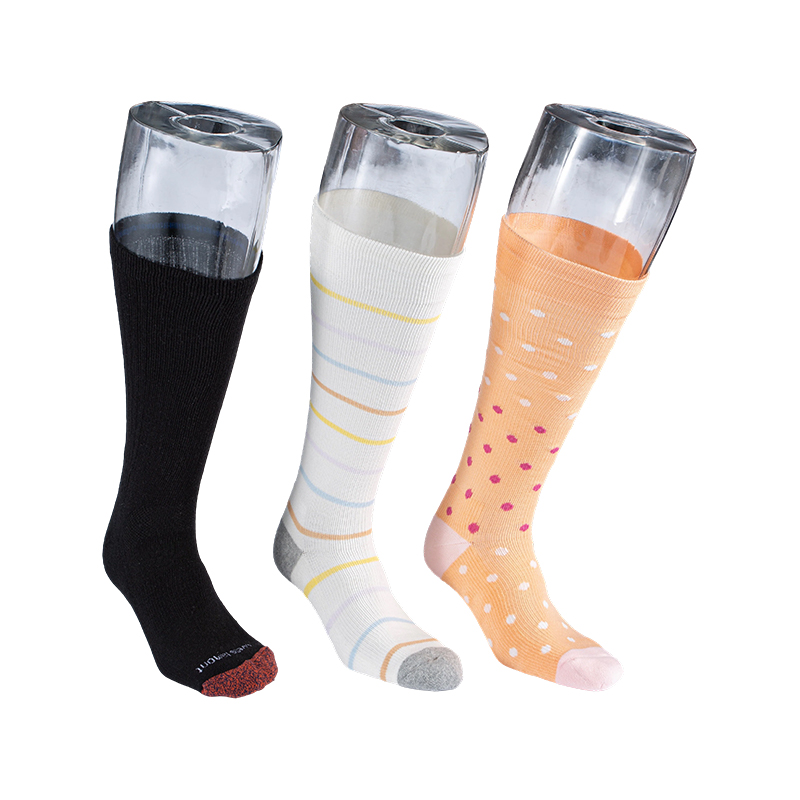 Over-the-Calf Compression Socks with Half-Cushion and High Cotton ContentThese knee-high socks feature an 85% cotton, nylon, and spandex blend for comfort and durability. The 144N half-cushion knit adds moderate shock absorption, while graduated compression helps reduce leg fatigue, fitting sizes 10-13 for all-day wear.View Product →
At the wholesale level, basketball compression socks become a custom product. Importers, team uniform suppliers, and brand buyers all start with the same specification sheet: yarn composition, compression level, sizing run, and customization options.
The key questions when sourcing from a manufacturer: Can they do custom logo knitting? What is the minimum order quantity? Can they produce different compression zones for different body types? A reliable partner will also provide a sizing chart in the local market's scale. For teams, color matching to a jersey palette is usually the primary constraint. For retail brands, the compression level needs to be clearly listed on the packaging so consumers understand what they are buying.
Compression tolerance is a hidden spec that buyers should ask about. A plus or minus 2 mmHg deviation is acceptable for most team orders, but mass-market products can vary by as much as plus or minus 8 mmHg, which changes the fit profile entirely. Asking for the compression test method and the actual measured values on several sample sizes prevents returns and fit complaints later.
Compression socks are one of the few sock categories where the pressure gradient must be tested during production, not just inspected after knitting. Request a compression tolerance statement from your supplier.
For a complete discussion of material durability and customization options, our sports team socks guide covers specification sheets in depth. You can also compare construction styles across the full basketball socks collection.
Quick answer: a properly fitted 15-20 mmHg pair works for most basketball players. Only move to 20-30 mmHg if you need more calf support on game days or are recovering from a strain.
With regular use and proper washing, a quality nylon-elastane pair should retain its compression gradient for 6-12 months. The first sign of wear is loss of elasticity at the ankle, which means the mmHg level has dropped.
Yes, 15-20 mmHg is safe for all-day wear. For levels above 25 mmHg, rest the legs overnight without the socks and consult a medical professional if you have pre-existing circulation issues.
They can help reduce calf and shin fatigue, which lowers the risk factors for shin splints. However, they do not treat inflammation. Proper stretching, strengthening, and shoe choice are still necessary.
They should feel firm but not leave indentations in the skin. You should be able to fit one finger between the sock cuff and your calf. Numbness or toe tingling means the gradient is too strong for your leg size.



 English
 中文简体
 Español