Sep 17, 2026
Content
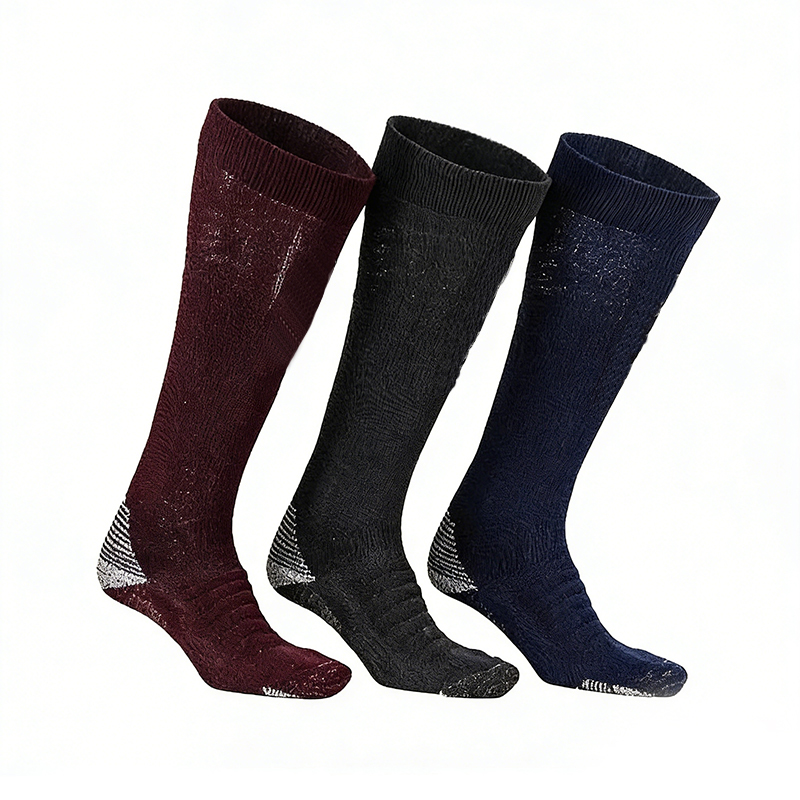
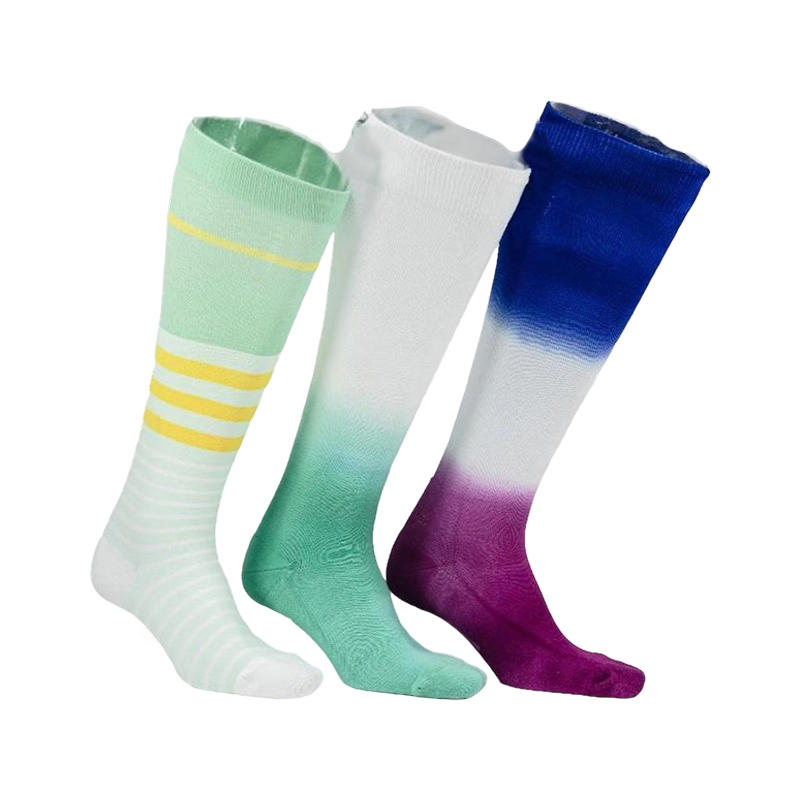
Most compression ski sock failures trace back to one of three causes: no gradient in the pressure, too much elastane and not enough recovery, or a mill that never washed the sock before shipping it. When our team at Haining City Bonroy Trading Co., Ltd. reviews a compression ski sock program for a customer, we ask for three documents first: a mmHg measurement chart, a laundering-retention report, and a yarn data sheet that names the actual fiber system. Compression ski socks are knitted hosiery that applies graduated pressure to the lower leg, usually between 15 and 20 mmHg, to stabilize the calf inside a rigid ski boot and support recovery during long on-snow days.
Compression does three specific jobs in a ski boot: it limits calf muscle oscillation, it helps move blood out of the lower leg, and it keeps the foot anchored to the sole. A rigid plastic shell has zero give, so every soft tissue movement inside the boot becomes either pressure or friction, and friction is what causes the shin-bang sensation that ends so many ski days early.
The key mechanism is graduated pressure. A properly engineered compression sock reads firmest at the ankle, releases toward the calf, and settles at the cuff. That V-shaped gradient pushes blood from superficial veins into deep veins, which reduces the heavy-leg fatigue that sets in after four hours of carving. Published compression garment studies consistently place active-assist compression at 15 to 20 mmHg. Below 15 mmHg, the effect is mostly tactile warmth. Above 20 mmHg, the sock becomes difficult to pull into the boot channel and can create pressure points.
The numbers that matter for a ski sock line are 8-12 mmHg for light warmth, 15-20 mmHg for performance skiing, and 20-30 mmHg for recovery only.
| Range | Typical Use | Fit Behavior in a Ski Boot |
| 8-12 mmHg | Light warmth, lounge models | Easy pull-on, minimal support |
| 15-20 mmHg | Alpine skiing, most active programs | Standard for performance lines |
| 20-30 mmHg | Post-ski recovery and travel | Tight in the boot, limits movement |
| 30+ mmHg | Medical and phlebology use | Not recommended for ski days |
Gradient matters more than the peak number. A graduated sock should read 20 mmHg at the ankle, 16 mmHg at the mid-calf, and 11 mmHg at the cuff. That V shape makes the product functional. A sock with uniform 18 mmHg everywhere will feel like a tight tube and will not deliver the venous-return benefit.
A durable compression ski sock is a merino-nylon-elastane knit on a 144 to 200 needle machine, not a stretchy tube that happens to say compression on the label. Merino wool is the thermal layer. The best ski socks use 18.5 to 21.5 micron merino, spun into a 3-4 ply to resist felting against boot cuffs. Nylon at 18-30% is the wear layer, because a ski boot lining is aggressive. Elastane at 8-15% is what creates the compression, but it must be heated and set during knitting. If the mill skips that heat-setting step, the elastane relaxes in the first ten washes.
Five construction zones decide whether the sock survives a season:
This is where ordering compression ski socks as a generic category gets dangerous. A sock pattern designed for nursing staff will not hold its gradient after repeated laundering, because the yarn system was never engineered for the cuff friction and moisture environment of a ski boot. When a supplier walks you through the yarn system and the needle count, you are protecting the program.
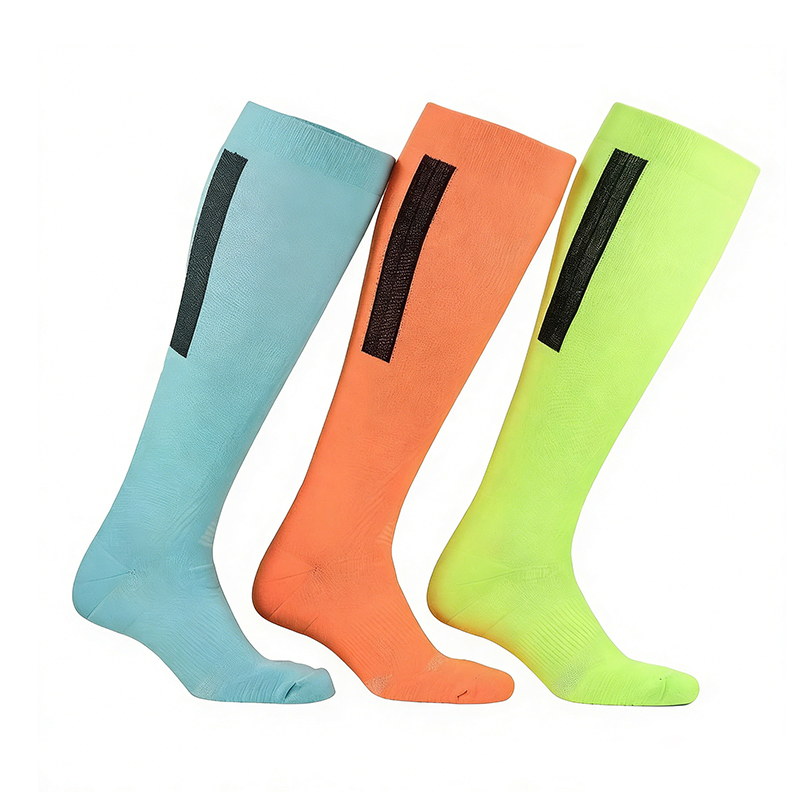 Compression SocksComponent 97%Polyamide 3%ElastaneView Product →
Request three documents from any candidate mill: a mmHg measurement chart, a 10-wash compression retention report, and a yarn data sheet describing the actual fiber blend. Those three documents tell you whether the factory understands compression or simply buys socks from a trade catalog.
Write these five items into the tech pack:
During recent supplier audits for a European buyer, seven out of ten sample lots labeled compression had no measurable gradient after ten washes. The cost was not just stock replacement. It was the buyer's own product claim in a regulated market. Our complete sock process analysis documents how gradient is built, and it is worth reading before you sign a tech pack.
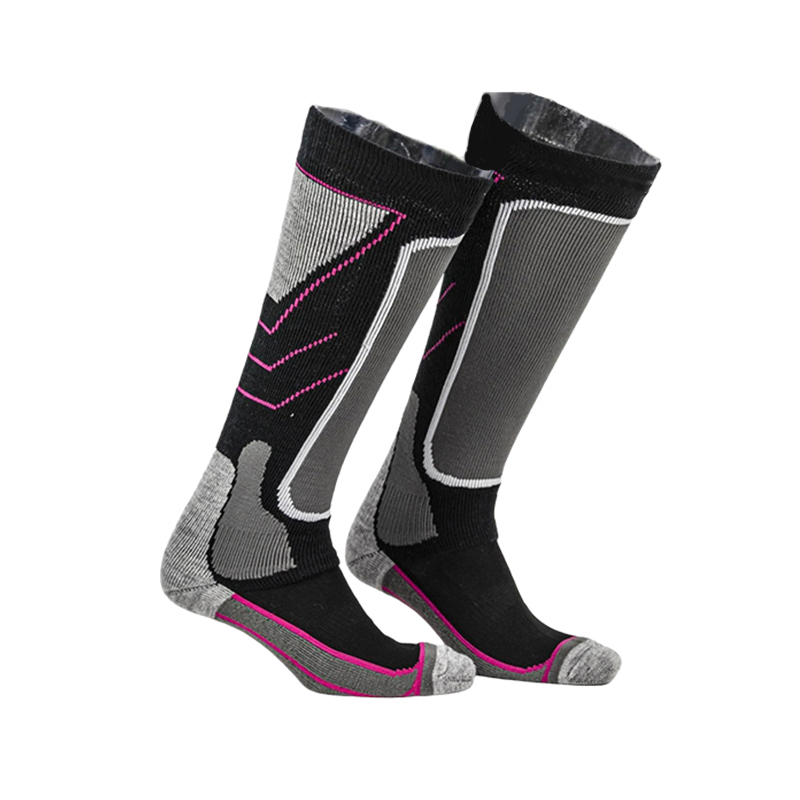 Men's Ski SocksComponent 50%Acrylic 24%Nylon 16%Wool 7%Polyester 3% RubberView Product →
Accept a compression decay of no more than 12 percent after 10 industrial washes, a flat toe seam under 5 mm, and zero visible cuff stretch after 24 hours of wear testing. Those are the floors for a durable program.
The industry reference for compression retention is a 10-15 percent decay after 10 washes under ISO 6330 conditions. A sock that decays more than that was not engineered for compression; it was knitted with a lot of elastane and no core stabilization. In our experience, the difference between a 9 percent decay sock and a 25 percent decay sock is rarely visible on day one. It shows up when your customer washes it.
Material durability is equally measurable. Merino fiber fineness under 21.5 microns predicts skin comfort. Needle count above 144 produces a smooth knit that does not snag on boot hardware. A hand-linked toe seam means no ridge against the toe box. These small numbers separate a dependable program from a one-season sock. The same material logic applies to team orders; our sports team socks guide covers materials, durability, and customization in more depth.
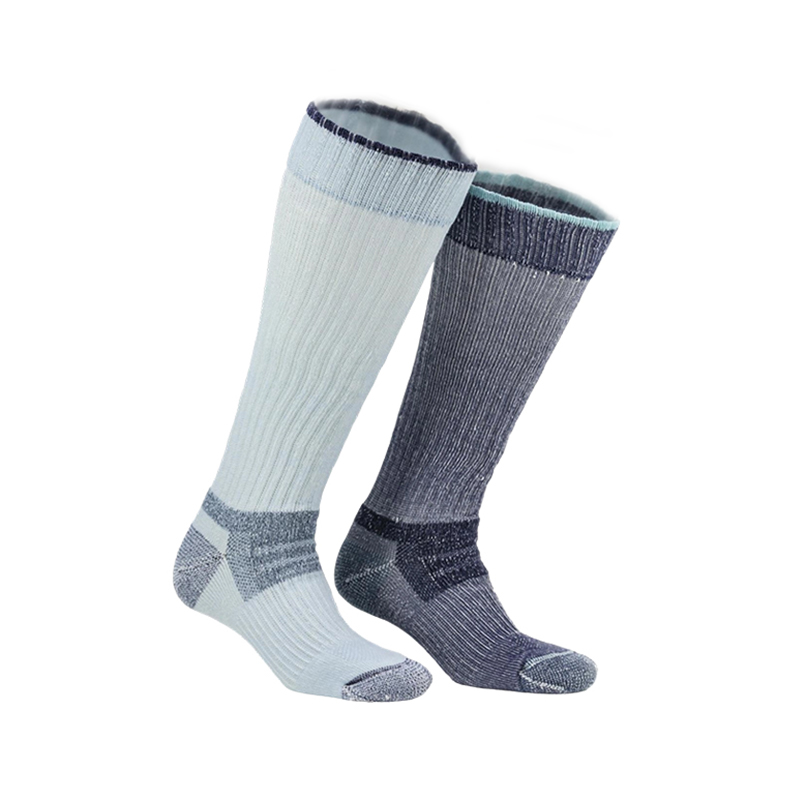 Ladies 2P Wool Knee High SockComponent 50%Acrylic 24%Nylon 16%Wool 7%Polyester 3% RubberView Product →
For general alpine skiing and for the center of a wholesale line, yes. If the line is a warmth-first beginner product, 8-15 mmHg fits better and keeps the boot easier to put on. Above 20 mmHg is recovery, not all-day skiing.
Usually yes if the rental boot has a flex-side channel. A thin merino-nylon compression sock at about 0.8 mm thickness preserves boot volume. For a performance fit, choose a 15-20 mmHg knit.
They help by spreading pressure across the shin zone, but no sock can fix a maladjusted boot. The boot flex and forward lean must be set first; the sock adds the cushion layer.
A well-constructed sock holds its gradient for 40 to 50 wash cycles. If you are testing a supplier sample, wash it 10 times and measure again.



 English
 中文简体
 Español