Sep 10, 2026
Content
A trail-ready hiker covering 10 miles on rocky ground takes roughly 20,000 steps. Each step drives friction and impact into the heel, the ball of the foot, and the toes. The sock is the only barrier between the skin and the boot. Comfortable hiking socks are engineered to handle that repeated pressure, yet many hikers still reach for cotton athletic socks, which absorb sweat, lose their shape, and create blisters within the first hour of a climb. The result is a shortened hike, painful feet, and a lesson learned the hard way. This guide covers the four factors that actually determine comfort in hiking socks, how to match cushioning to terrain, and how to choose the right pair for every season.
Comfort in hiking socks is measurable, and it comes down to four factors: material composition, cushioning density, anatomical fit, and moisture management. If any one of these fails, the sock will cause problems regardless of the other three.
Field data supports this. In long-distance hiking surveys, foot blistering affects up to 50% of participants on multi-day treks, and sock selection is the most controllable preventive factor. Blisters are not simply a function of distance walked; they are a function of friction plus moisture. A sock that cannot move moisture away from the skin creates the exact condition that blisters need to form.
| Factor | What It Controls | Comfort Impact |
| Material | Moisture absorption, insulation, breathability | Determines wetness and thermal stability |
| Cushioning | Impact absorption at heel, toe, metatarsal | Reduces pressure points and fatigue |
| Fit and Shape | Pressure distribution, movement inside the boot | Prevents friction and hot spots |
| Compression and Elasticity | Blood circulation, swelling control | Reduces foot fatigue over distance |
Most hikers mistake thickness for cushioning. A thick sock made from low-quality yarn will collapse under pressure, while a medium-weight merino sock with high-density terry loops maintains its loft over many miles. Yarn quality and knitting density matter more than the overall sock weight.
Merino wool is the leading material for comfortable hiking socks because the fiber's natural crimp traps air for insulation while its surface actively moves moisture vapor away from the skin before it can saturate. Cotton is the opposite: it absorbs liquid water, holds it against the skin, and loses all thermal value when wet. The chart below shows how different fiber materials rate for moisture management.
Wool blends that combine merino with nylon or polyester deliver the best balance for most hikers. The synthetic fibers add durability and elasticity, while the merino keeps moisture management and odor resistance intact. During high-intensity climbs, a wool blend with 30% nylon or polyester will retain its shape and resist abrasion far better than a 100% merino sock.
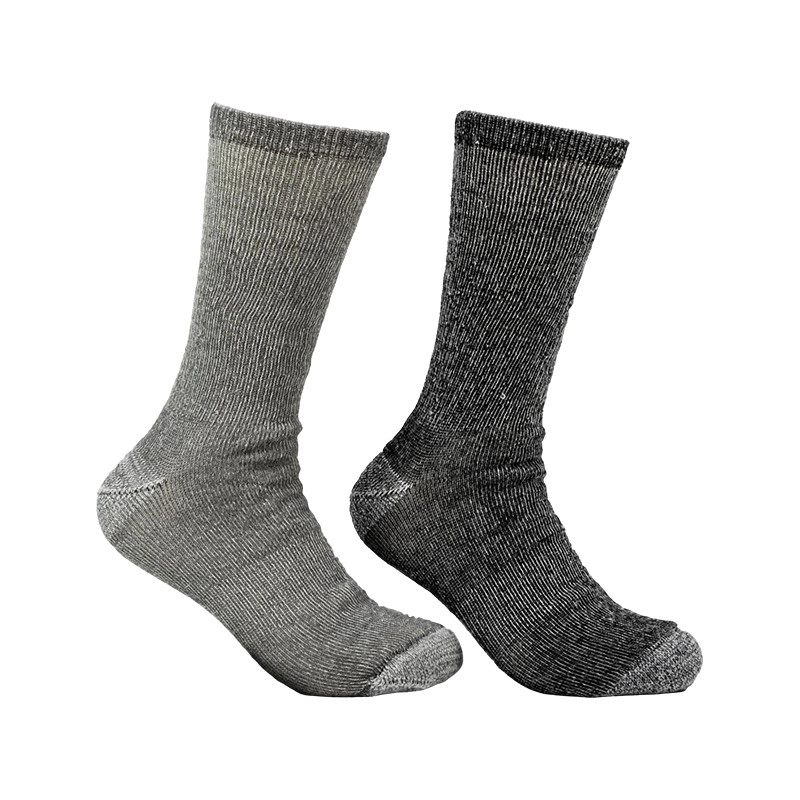 Men's Merino Wool Blend Crew Socks with Nylon ReinforcementThese mid-weight crew socks combine 62% merino wool with nylon and spandex for durability and warmth, making them a practical choice for hiking and cold-weather work.View Product →
Pure synthetic socks dry very quickly but offer less thermal insulation when the temperature drops. They also tend to retain odor after repeated use, which becomes a practical issue on multi-day treks. Pure merino is softer but wears out faster and loses its structure around the heel and toe. You can trace these performance differences back to the yarn itself. Understanding the sock manufacturing process helps a buyer evaluate whether a supplier has the knitting machinery to deliver consistent quality.
Cushioning in hiking socks is functional padding, not a luxury. It appears as terry loops in the heel, toe, and metatarsal zones, and the thickness of those loops determines how much impact the sock absorbs. The cushioning level also affects breathability: thicker terry loops trap warmth while lighter zones allow heat to escape.
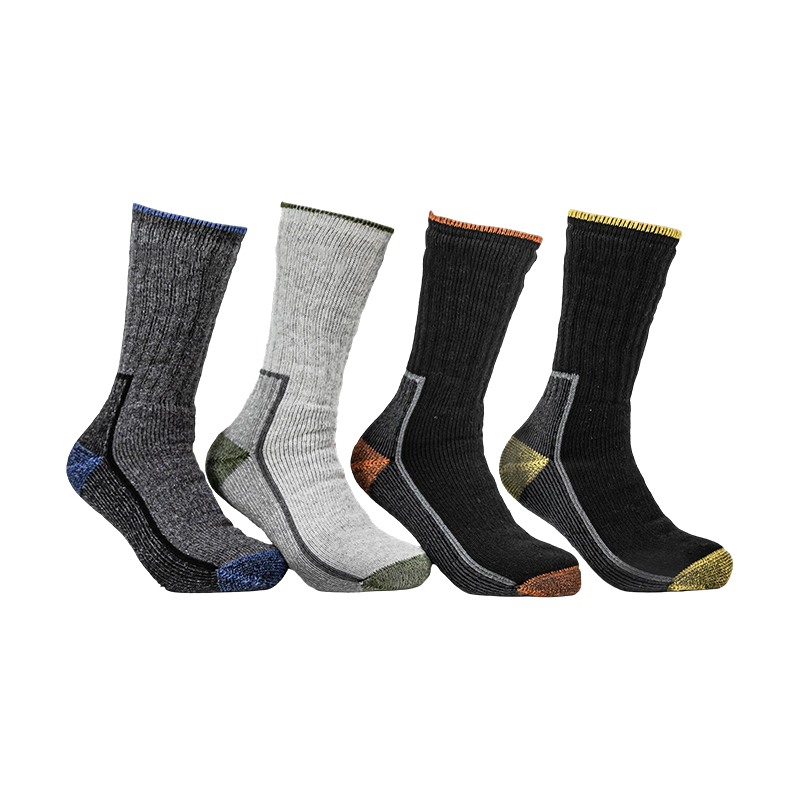 Heavyweight Hiking Socks with Full Terry CushioningDesigned for rugged terrain, these 84-needle socks offer dense terry cushioning and a blend of acrylic, nylon, and wool for impact absorption and moisture control.View Product →
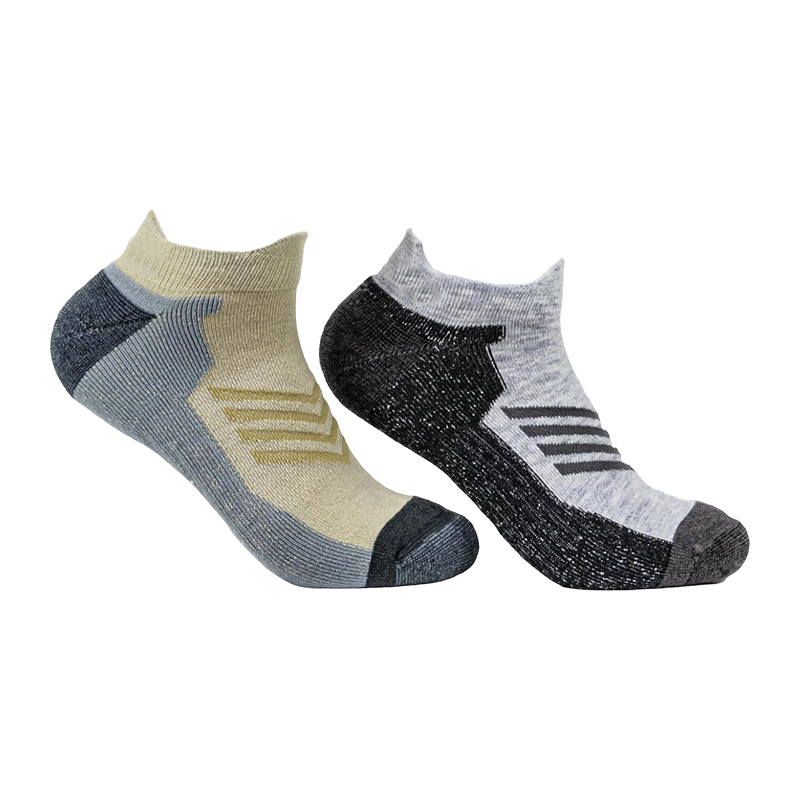 Lightweight Ankle Hiking Socks with Terry FootbedThese breathable ankle socks use a 144-needle terry knit with wool and synthetic fibers to provide light cushioning and moisture management for active use.View Product →
Another key detail is the cushioning position. Most hiking sock patterns place terry loops only in the footbed area and leave the instep and ankle thinner, which allows the boot to flex naturally. Socks with full-length cushioning limit ankle mobility and can create hot spots inside a stiff boot. A properly designed hiking sock should feel like a glove around the arch while remaining light across the top of the foot.
Fit is the difference between a sock that feels like a second skin and a sock that bunches and slides. A well-fitted hiking sock has a shaped heel, a contoured arch band, and a toe box that follows the natural foot shape without pulling across the toes. Compression in the arch and instep keeps the sock in place and supports the midfoot muscles during long descents.
What is a comfortable hiking sock? It is a technical knit garment that combines merino or wool-blend yarn with targeted terry padding, a shaped fit, and moderate arch compression to control moisture, reduce friction, and support the foot over trail distances.
To prevent blisters, apply these rules on your next hike:
Elastic recovery is a hidden quality indicator. When a hiking sock loses its stretch, the cuff falls down and the ankle area bunches, which creates a new friction point exactly where the boot collar presses. Many hikers replace boots long before replacing socks, which is backwards because degraded socks stop protecting the foot after 150-200 trail miles.
Seasonal sock selection follows one rule: match the cushioning weight to the temperature and weather, not the calendar month. A thick winter sock in 70-degree weather causes sweaty feet, while a lightweight sock in 35-degree rain chills the feet quickly.
| Season / Condition | Sock Type | Key Features |
| Summer / 65-85°F | Light cushion, merino blend | Breathable, thin, quick-drying |
| Spring and Autumn / 45-65°F | Medium cushion, merino wool | Balanced warmth and wicking |
| Winter / Below 45°F | Heavy cushion, wool blend | Extra loft, thermal insulation |
| Wet Conditions | Medium-heavy, wool blend | Fast-drying, odor-resistant |
Extremely cold conditions call for heavy cushioning with a higher wool content, while very hot and humid climates favor lightweight merino blends. For wet trails, the fastest-drying construction is a medium cushioning sock with high synthetic fiber content. In all cases, moisture management matters more than thickness. Browse the full hiking socks collection to see specific options for every season.
Replace hiking socks when the cushioning flattens or the elastic recovery drops, typically after 150-200 trail miles. Worn terry loops stop absorbing impact, and loose cuffs cause new friction points.
Yes, in wet or cold conditions. A thin liner creates an extra friction barrier and moves moisture away from the skin, but in warm dry weather a single well-fitted sock is more effective.
Yes. The combination of merino wool and targeted cushioning reduces the two triggering factors of blisters: friction and moisture. Cotton socks hold water and create the sticky interface where blisters start.
Yes. Lightweight merino wool hiking socks are ideal for summer because the fiber regulates temperature and keeps the foot dry. Choose light cushioning rather than the heavy winter weight.



 English
 中文简体
 Español