Oct 15, 2026
Content
A children's walking sock is not a scaled-down adult sock, and treating it like one is the quickest route to a returned order. Across the kids' walking socks we sample and ship at Haining City Bonroy Trading Co., Ltd., almost every complaint traces back to one of three lines on the spec sheet: cuff pressure copied from an adult pattern, a heel turn with no terry reinforcement, and a size grid that jumps two centimetres between age bands.
Children's walking socks live in a narrow performance window. They have to survive playground grit, scuffed shoe counters and a foot that grows about one centimetre every six to eight months, while still staying soft enough that a six-year-old keeps them on for a two-hour walk. That is a specification problem rather than a styling problem.
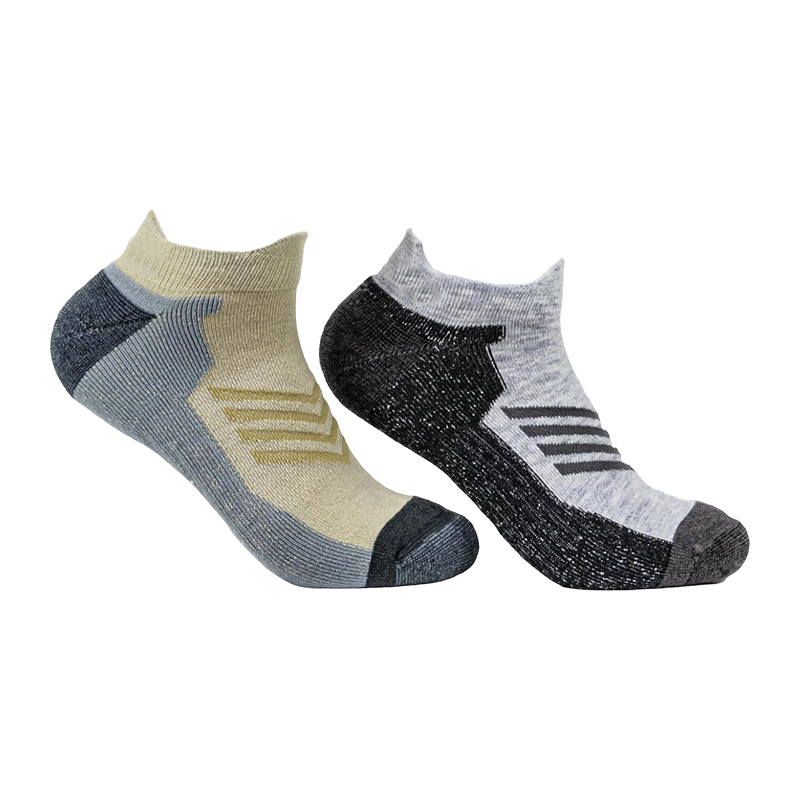
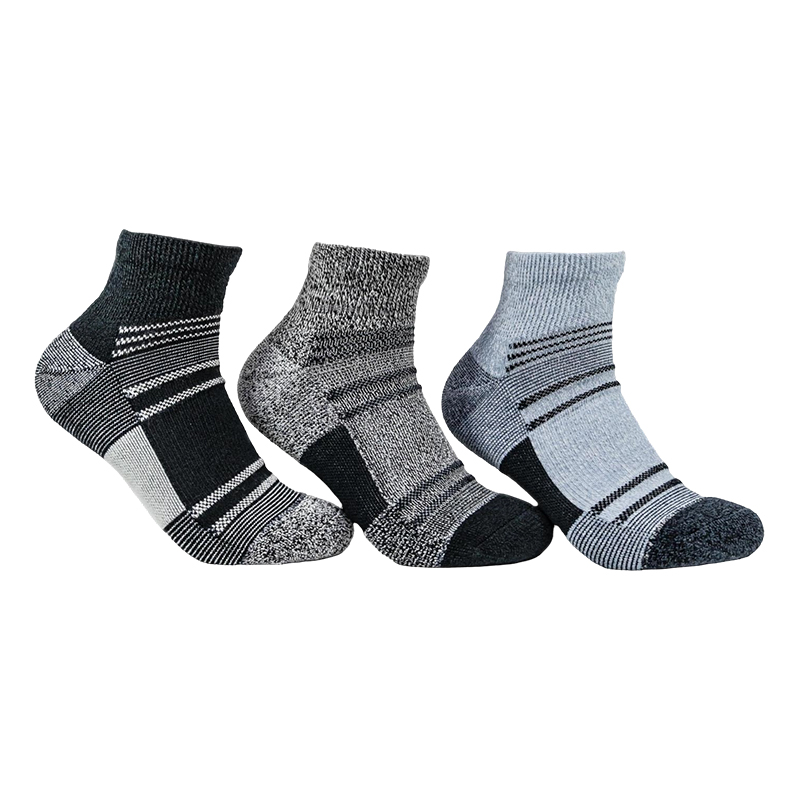
For buyers, this makes children's walking socks one of the more technical lines in a kids' accessory programme. The children's sock collection covers everything from babies' terry socks to long school crews, with walking styles sitting in between: crew height for ankle coverage, a reinforced heel, and motifs a child will actually accept.
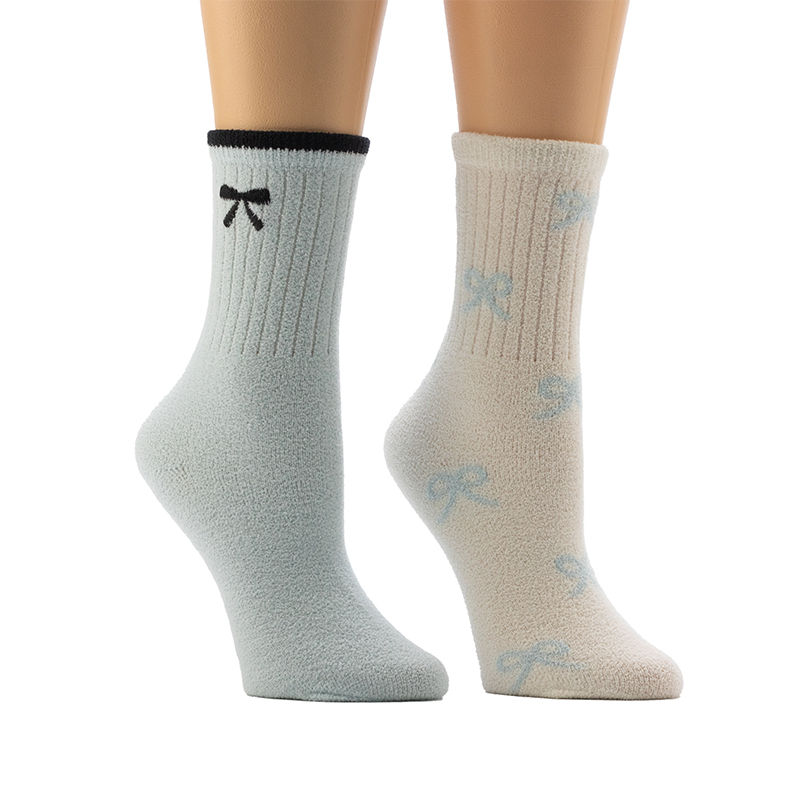
Pattern work is not decoration here. In the three-to-six age band, a printed or animal motif is often the reason a child agrees to wear the sock at all, which is why ranges that pair a plain multipack with a patterned option sell through faster.
 Custom Kids' Animal Socks with 144-Needle Cotton-Rich KnitCustom kids' animal socks with 144-needle knit, cotton-rich blend, and pediatric fit; patterned motifs can encourage wear in three-to-six age range.View Product →
Children's walking socks differ from adult walking socks in four measurable ways: cuff stretch, foot grading, cushioning placement and toe-seam construction. Each one is a line item you can put a number on before tooling starts.
Get the grading wrong and the sock is either loose enough to slide down inside a trainer or tight enough to leave a welt. The grid below is the starting point we use for walking styles. Buyers adjust the age bands, but the foot-length increments should stay at one centimetre across the core range.
| Age band | Foot length | EU size | Cuff height | Cushioning |
| Toddler, 1-3 years | 12.0-14.9 cm | 20-23 | 5-6 cm crew | Light terry sole |
| Preschool, 3-5 years | 15.0-17.4 cm | 24-27 | 6-8 cm crew | Terry sole and heel turn |
| Junior, 5-8 years | 17.5-20.5 cm | 28-32 | 8-10 cm crew | Full-sole terry, light arch band |
| Older kids, 8-12 years | 20.6-23.5 cm | 33-36 | 10-12 cm crew | Terry sole, heel and toe |
A cuff that measures correctly on a relaxed sock can still be four millimetres too tight once a child's ankle has been inside it for an hour of walking.
Six lines decide whether a children's walking sock order runs cleanly: foot-length grid, relaxed cuff measurement, terry zones, toe-seam type, yarn composition and shrinkage after three washes. When a buyer and a factory agree on those six numbers, the large majority of construction disputes never happen at all.
Toe seams and body knits are the two lines buyers leave open most often, and they are the two that change how a sock feels on a child's foot. A flat linked seam costs a few cents more per pair and removes almost all toe irritation. A terry loop body adds warmth, but it also adds bulk inside a snug school shoe.
Flat linked toe seam
Standard overlock seam
For sourcing purposes, a children's walking sock is a crew or mid-height sock built on a kids' last with one-centimetre foot grading, a reinforced terry heel turn and a flat toe seam, and it must hold its relaxed cuff measurement after three home washes at 40 degrees.
Once those six lines are signed off, colour and pattern work can move in parallel. Colour-blocked crews are one of the simplest ways to cover a broad age range with a single body construction.
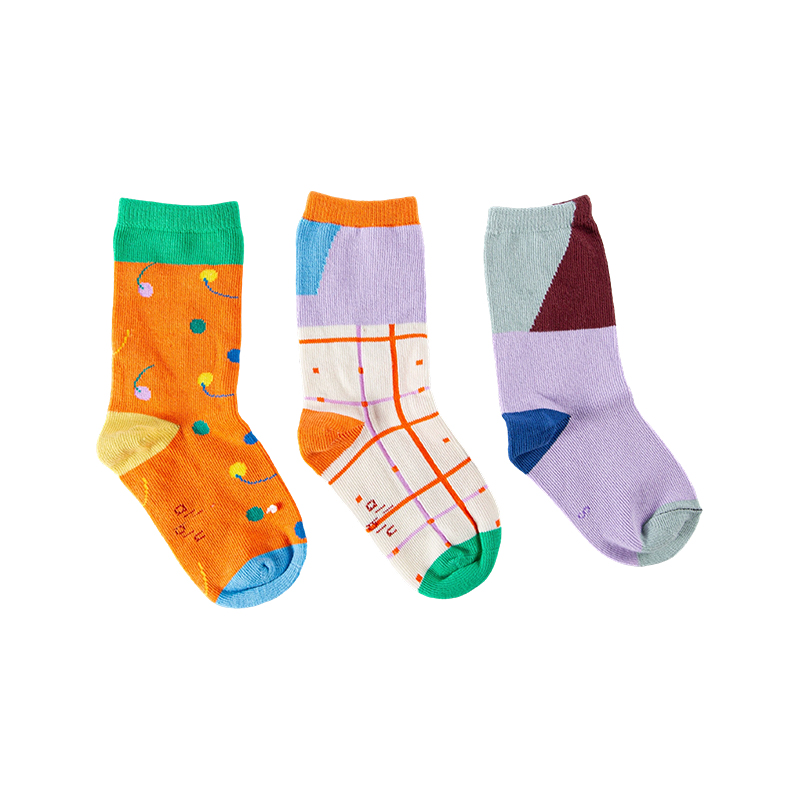 Kids' Color-block Crew Socks in Cotton-Rich 144N KnitColor-block crew socks for ages 3-8 with 144N knit and cotton-rich blend; single body construction covers daily school and active wear.View Product →
The heel turn is the first point of failure in children's walking socks, followed by the ball of the foot and then the toe. That order holds across cotton, wool and synthetic blends, because a child's heel rotates inside a shoe far more than an adult's does.
Martindale abrasion cycles before heel failure, by sock body construction
The spread between constructions is wide enough to change your price negotiation. A plain flat body without a terry heel can fail at less than half the cycle count of a terry-reinforced heel turn, which is why heel terry belongs in the fixed cost of a walking style rather than in the optional upgrades.
Compliance documentation, not knitting, is the most common reason a children's walking sock order misses its ship date. Test reports expire, tracking labels have to be printed before packing, and fibre content on the care label has to match the lab result within a narrow tolerance.
Documentation also has to line up with how the sock is actually built. Buyers who want to check the route from yarn to finished pair before writing a purchase order can read our walkthrough of the sock production process, which maps every hand-off that a compliance file depends on.
Budget five to seven extra days for testing when an order needs fresh Class I certification. Starting that test alongside sample approval, instead of after the bulk order is confirmed, keeps the original shipping window intact.
A 5,000-pair children's walking sock order typically runs 45 to 65 days from brief to shipment when testing and approval steps are scheduled in advance instead of discovered along the way.
A range built on simple long crews with one terry construction will move through this timeline noticeably faster than a range assembled from six separate prints and three body weights.
 Custom Kids' Long Socks with 144-Needle Cotton-Rich KnitCustom mid-calf kids' long socks with 144-needle cotton-rich knit, contoured heel and flat toe; a simple long-sock range can ease production planning.View Product →
Most factories start at 1,000 to 2,000 pairs per colourway per size set, and 500-pair runs are sometimes possible when stock yarn is used. The size set matters more than the headline total: a five-size range at 1,000 pairs each is a very different order from a single size at 5,000 pairs.
Four to six sizes spanning 12.0 cm to 23.5 cm of foot length will serve most children from toddler to around twelve years. Keep the core sizes in one-centimetre steps and allow the outer sizes to stretch to two centimetres.
A cotton, polyester and elastane blend around 70/27/3 in a flat knit with a terry heel is the most durable mainstream option. Merino blends suit cold-weather walking, while 100 percent cotton should be avoided in the heel because it abrades faster and holds moisture against the skin.
Allow 25 to 40 days for bulk knitting and linking on a 5,000-pair order, plus five to eight days for packing and inspection. Fresh compliance testing can add another five to seven days if it was not started during sampling.
Children's walking socks reward buyers who put numbers on the spec sheet early. Lock the foot-length grid, the relaxed cuff measurement and the terry map, and the rest of the range, from colour-blocked crews to long school styles, becomes a predictable repeat order rather than a fresh negotiation every season.



 English
 中文简体
 Español